





















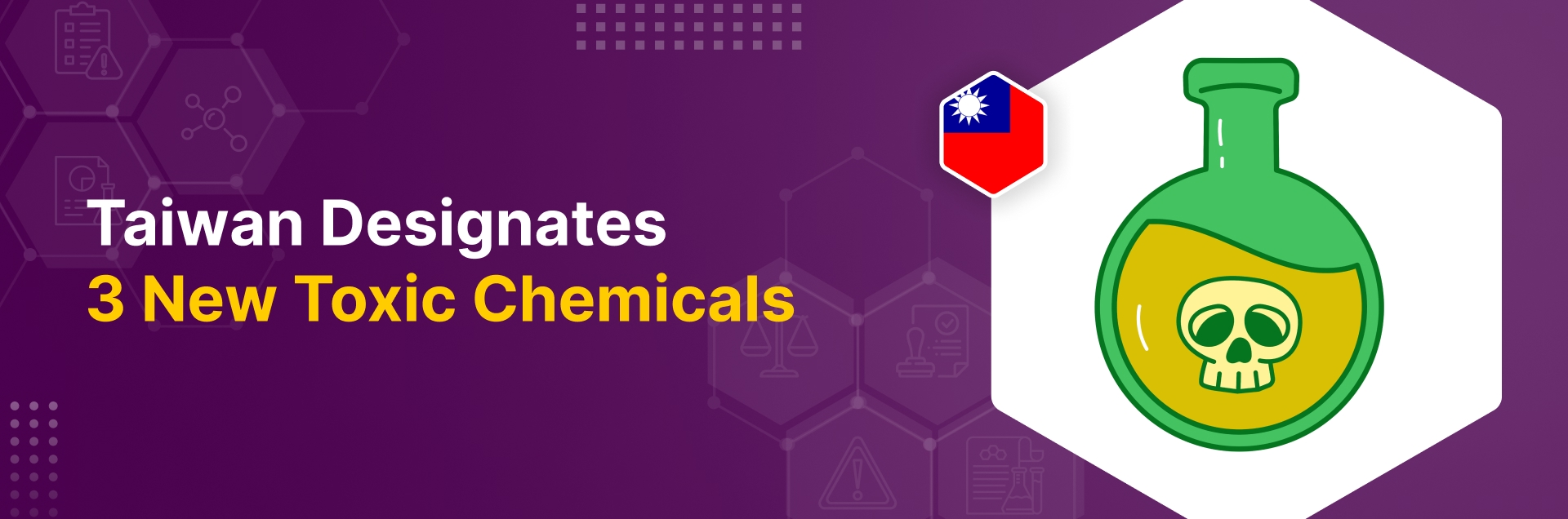
Taiwan’s Ministry of Environment (MOENV) has classified methoxychlor, dechlorane plus, and UV-328 as regulated toxic chemical substances under the Toxic and Concerned Chemical Substances Control Act (TCCSCA), effective July 1, 2026, aligning domestic control with the Stockholm Convention’s persistent organic pollutant phase-out.
What Happened
MOENV amended the Categories and Management of Handling for Toxic Chemical Substances on April 27, 2026, bringing methoxychlor, dechlorane plus, and UV-328 under classified handling from July 1, 2026. All three are Annex A Stockholm Convention substances, cited for persistence, bioaccumulation, and food-chain transfer potential. The same amendment also revised prohibited-handling items for mercury and tightened rules on tetrachloroethylene.
What’s New
- Methoxychlor and dechlorane plus handling confined to research, testing, and educational use only.
- UV-328 (a benzotriazole UV absorber used in coatings, plastics, and sealants) brought under classified handling with matching operational conditions.
- Related revisions to mercury prohibited-handling items and tightened tetrachloroethylene rules, with transition periods for affected businesses.
Key Dates & Compliance Deadlines
MOENV adopted the amendment to toxic chemical categories.
Classifications take effect; classified handling obligations apply.
Affected Industries
Coatings, plastics, and sealant manufacturers (UV-328); agrochemical/pesticide-adjacent industries (methoxychlor); flame-retardant and industrial chemical users (dechlorane plus); Taiwan-based chemical handlers and importers generally.
Who Is Affected
Operators that manufacture, import, use, or release methoxychlor, dechlorane plus, or UV-328 in Taiwan, plus businesses affected by the related mercury and tetrachloroethylene rule changes.
Substances / Products in Scope
Methoxychlor, dechlorane plus, UV-328 (benzotriazole UV absorber); also mercury and tetrachloroethylene (related revisions) — all under Taiwan TCCSCA.
Prohibitions, Restrictions & Exemptions
Methoxychlor and dechlorane plus restricted to research, testing, and educational use only; UV-328 subject to classified handling permits and operational conditions; grace/transition periods apply for wind-down of non-compliant uses.
What Companies Should Do
- Confirm whether products or processes contain methoxychlor, dechlorane plus, or UV-328.
- Secure required TCCSCA handling permits and meet record-keeping/release-prevention duties.
- Plan product or process substitution before applicable grace periods expire.
- Review exposure to the related mercury and tetrachloroethylene rule changes in the same amendment.
Companies using UV-328 in coatings, plastics, or sealants for the Taiwan market face the most direct ongoing compliance burden, given the substance’s broad industrial use; methoxychlor and dechlorane plus are now effectively restricted to non-commercial uses.
Reach out to our regulation experts on chemical and product regulatory compliances