


































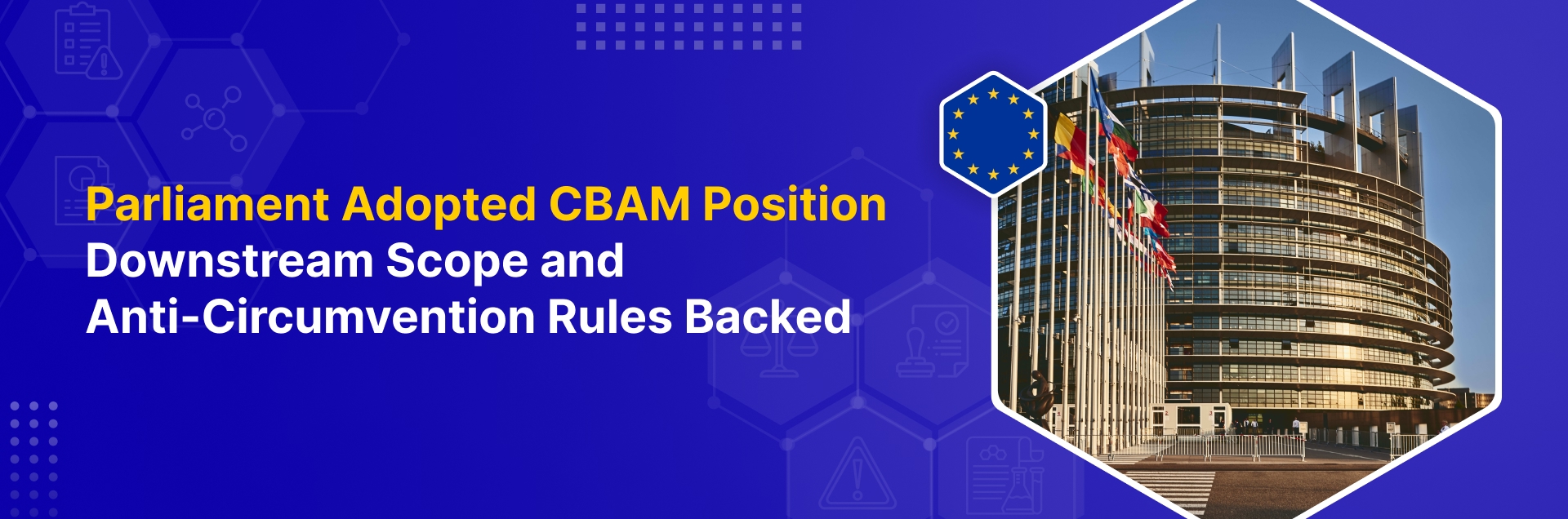
The European Parliament has adopted its position on the proposed CBAM changes by 464 votes to 50, with 159 abstentions, setting its mandate for negotiations with the Council. Parliament wants CBAM to reach more downstream steel and aluminium goods than the Commission proposed.
What Parliament Wants From the CBAM Changes
The plenary vote follows the Environment Committee’s position of 29 June 2026 and the Council’s position of 12 June 2026. A separate position on the Temporary Decarbonisation Fund passed by 433 votes to 97, with 146 abstentions. Parliament is now ready to begin negotiations with the Council, with the aim of concluding before the end of 2026.
The Commission’s proposal would add 180 downstream steel and aluminium products from 1 January 2028; the Environment Committee’s position went further, to 457 products.
What’s New
- Scope extended to downstream steel and aluminium products with high metal content, such as fasteners, wire, springs and household articles, beyond the Commission’s 180-product proposal.
- Tougher anti-circumvention rules, with a lower threshold for when minor product changes count as circumvention, aimed at arrangements made specifically to avoid CBAM, and default emissions values from the actual country of origin where a pattern of circumvention is found.
- The proposed temporary removal of products during price shocks is rejected; CBAM revenues from affected products would instead be redirected to the sectors concerned.
- The proposal to deduct Article 6 Paris Agreement carbon credits from CBAM obligations was removed and deferred to the upcoming ETS revision.
- A new exemption covers electricity imports from non-EU countries that grid operators use to keep networks stable.
- Temporary Decarbonisation Fund support would run from 2027 to 2029 rather than starting in 2028, and eligibility would extend to downstream users facing higher carbon-related input costs.
Key Dates & Timeline
Who and What Is in Scope
Industries: Light duty vehicles · Heavy duty vehicles · Automotive components · Fasteners and metal formed parts · Electrical and electronic equipment · Batteries
Who is affected: Importers of record and authorised CBAM declarants; tier-1 and tier-n suppliers of steel and aluminium parts into the EU; OEM purchasing, customs and sustainability functions; non-EU installation operators asked for embedded-emissions data.
Products and standards in scope: Iron and steel and aluminium CBAM goods, plus the proposed downstream categories of finished steel and aluminium articles, including fasteners, wire and springs.
Requirements and restrictions: No new prohibition. The obligation remains to declare embedded emissions and surrender CBAM certificates for covered imports. Where circumvention patterns are found, the Commission could apply default emissions values rather than accepting declared figures.
What Companies Should Do
- Re-run CBAM scope screening against the proposed downstream categories; parts treated as out of scope because they are finished articles may come in.
- Ask non-EU suppliers of steel and aluminium components whether they can supply verified embedded-emissions data.
- Remove any Article 6 credit assumptions from CBAM cost forecasts.
- Track the trilogue outcome on downstream scope, because it drives bill-of-materials exposure from 2028.
Parliament has backed a wider CBAM that reaches finished metal parts. The downstream scope question is now in trilogue, and automotive supply chains should test their assumptions before the final text is agreed.
Related: CBAM compliance services | CBAM Verification Guidance: First Rules Out
European Parliament press release — Strengthening the EU carbon border adjustment mechanism and closing loopholes — https://www.europarl.europa.eu/news/en/press-room/20260911IPR47450/strengthening-the-eu-carbon-border-adjustment-mechanism-and-closing-loopholes
Reach out to our regulation experts on chemical and product regulatory compliances