

































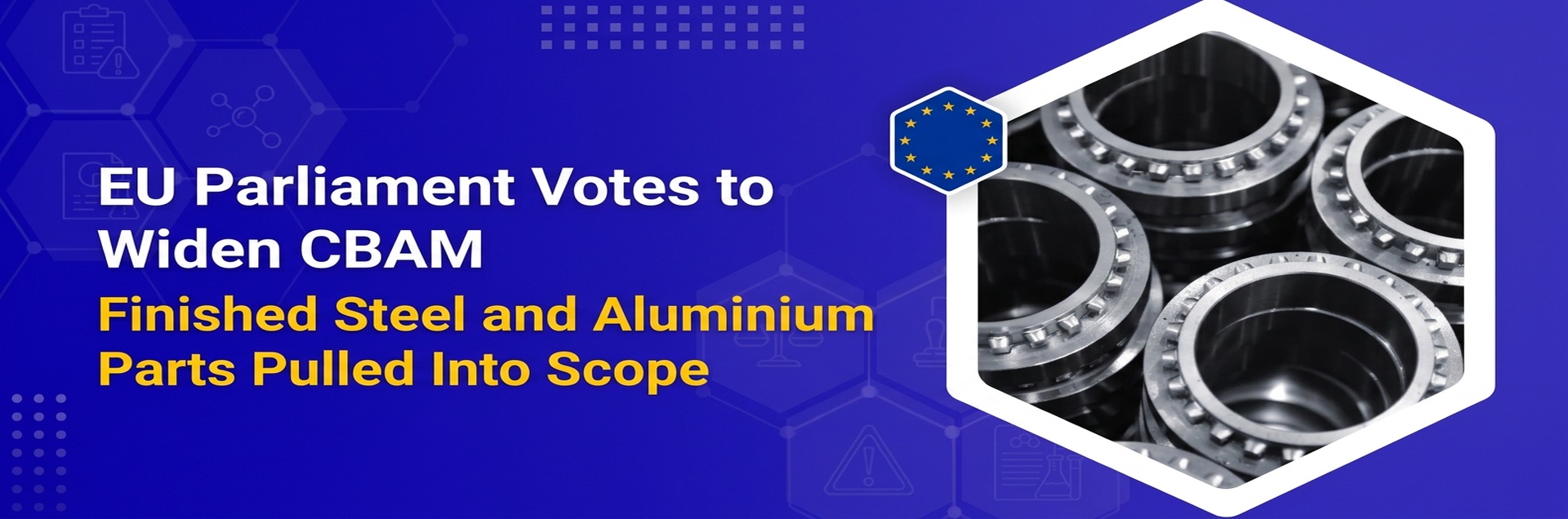
The European Parliament’s Environment Committee has adopted its position on reforming the Carbon Border Adjustment Mechanism, extending the scheme to downstream steel and aluminium goods and tightening anti-circumvention rules. For vehicle manufacturers, the significant change is that finished metal articles — fasteners, wire and springs among them — are pulled into CBAM scope.
What Happened
The Environment Committee (ENVI) adopted two related positions. The CBAM reform text passed by 56 votes to 11 with 12 abstentions, and the accompanying Temporary Decarbonisation Fund position passed by 59 to 16 with 6 abstentions. The reforms respond to evidence that the mechanism as first designed could be avoided by importing goods one processing step further down the value chain, or by splitting shipments below de minimis thresholds. The Committee has also removed the option to offset CBAM obligations with Paris Agreement Article 6 carbon credits.
What’s New
- Scope extended to downstream products, explicitly including finished steel and aluminium goods such as fasteners, wire, springs and household articles.
- Anti-circumvention rules tightened against arrangements set up purely to dodge CBAM, with the Commission empowered to apply default emissions values where circumvention patterns are identified.
- New online-sales rules apply weight-based limits to a seller’s total shipments, with retroactive liability where thresholds are split across consignments.
- The safeguard permitting removals in the event of a price shock is deleted and replaced by a mechanism redirecting CBAM revenues to affected sectors.
- A new exemption is added for electricity flows from non-EU countries used by grid operators.
- The option to count Article 6 carbon credits against CBAM obligations is removed.
- The Temporary Decarbonisation Fund support period is extended to 2027-2029, and eligibility widened to fertiliser producers and to all downstream operators using CBAM-covered goods as inputs.
Key Dates & Timeline
ENVI Committee adopts both positions
Parliament due to adopt its negotiating mandate — confirm the outcome before relying on the committee text
Trilogue negotiations with Council and Commission
Affected Industries
Light duty vehicles · Heavy duty vehicles · Automotive components · Fasteners and metal formed parts · Electrical and electronic equipment · Batteries
Who Is Affected
Importers of record and authorised CBAM declarants; tier-1 and tier-n suppliers of steel and aluminium parts into the EU; OEM purchasing, customs and sustainability functions; non-EU installation operators asked for embedded-emissions data.
Standards / Products in Scope
Iron and steel, aluminium and copper CBAM goods, plus the newly proposed downstream categories of finished steel and aluminium articles including fasteners, wire and springs.
Prohibitions, Restrictions & Requirements
No new prohibition. The obligation is to declare embedded emissions and surrender CBAM certificates for covered imports. Where circumvention patterns are found, the Commission may impose default emissions values rather than accepting declared figures, and split online shipments may attract retroactive liability.
What Companies Should Do
- Re-run your CBAM scope screening against the proposed downstream categories — parts you currently treat as out of scope because they are finished articles may come in.
- Reconfirm that non-EU suppliers of steel and aluminium components can supply actual embedded-emissions data rather than relying on defaults.
- Where you had modelled Article 6 credits into a CBAM cost forecast, remove them and re-price.
- Check whether Parliament adopted its negotiating mandate at the September plenary before treating the committee text as settled. The downstream-scope question is the one to watch for your bill of materials.
CBAM is moving from a raw-metals mechanism to one that reaches finished metal parts. Automotive supply chains that assumed component imports sat outside the mechanism should re-test that assumption while the scope is still being negotiated in trilogue.
Reach out to our regulation experts on chemical and product regulatory compliances