


























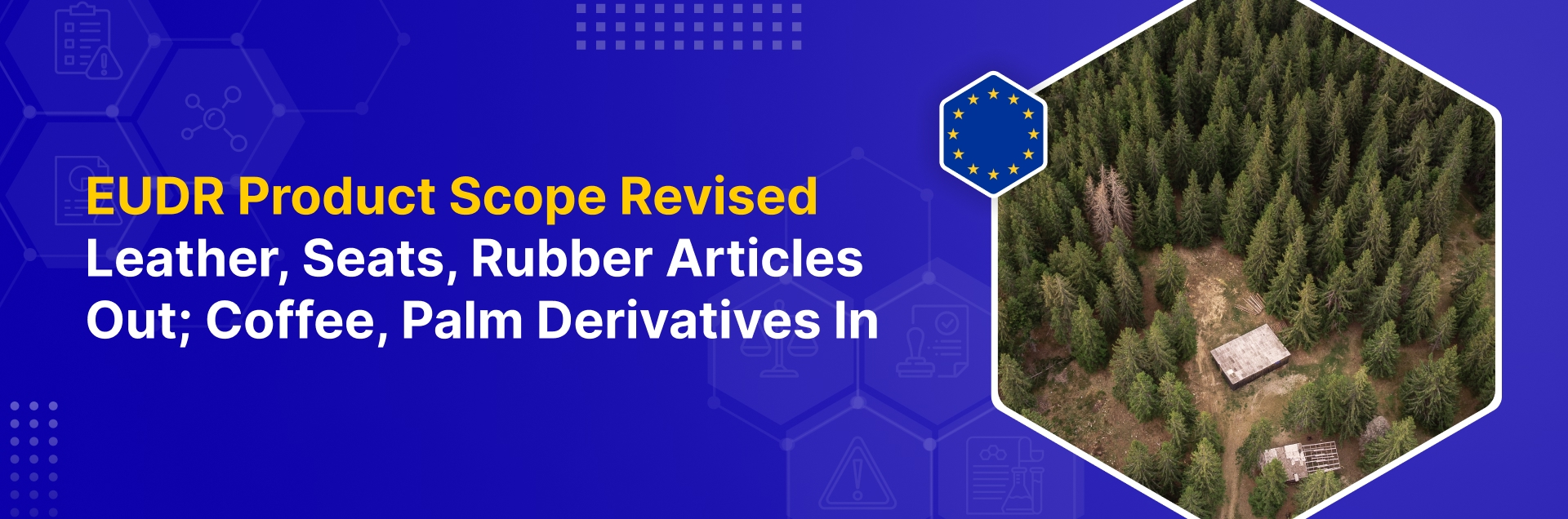
Commission Delegated Regulation (EU) 2026/2102 updates Annex I of the EU Deforestation Regulation. It removes several automotive-relevant items, including leather and vehicle seats, and adds soluble coffee, certain palm oil derivatives and frozen cattle tongues. It entered into force on 18 September 2026.
What the EU Deforestation Regulation Change Means
The Delegated Regulation of 13 July 2026 removes cattle hides, skins and leather, re-treaded tyres, soybeans for sowing, articles of vulcanised rubber, conveyor and transmission belts, and aircraft and motor vehicle seats from the scope of the Regulation. Some entries are narrowed rather than deleted; for example, the seats entry (HS 9401) is limited to wooden seats and seat parts.
To allow businesses sufficient time to prepare, the newly added products become subject to the Regulation from 30 December 2027. The act also introduces targeted exemptions for waste, used and second-hand products, packing material, products used for medicinal purposes, and samples and products used for analysis, examination and testing.
What’s New
- Removed from Annex I: cattle hides, skins and leather; re-treaded tyres; soybeans for sowing; articles of vulcanised rubber; conveyor and transmission belts; and aircraft and motor vehicle seats.
- Added from 30 December 2027: soluble coffee and coffee extracts, certain palm oil derivatives, frozen cattle tongues and certain soap products.
- Targeted exemptions for waste, used and second-hand products, packing material, medicinal-product uses, and samples for analysis, examination and testing.
- The EUDR itself applies to large and medium-sized operators and traders from 30 December 2026, and to micro and small operators from 30 June 2027.
Key Dates & Timeline
Who and What Is in Scope
Industries: Light duty vehicles · Heavy duty vehicles · Automotive components · Tyres and rubber · Footwear and leather goods · Oleochemicals and soap · Food and beverage
Who is affected: Operators and traders placing Annex I products on the EU market or exporting them, including automotive suppliers of leather trim, seats, tyres and rubber components that now fall out of scope, and companies handling the newly added palm, coffee and soap products.
Products and standards in scope: Annex I products and HS codes of Regulation (EU) 2023/1115, as amended by Delegated Regulation (EU) 2026/2102.
Requirements and restrictions: Due diligence obligations continue to apply to products that remain in Annex I. Products removed from Annex I no longer need EUDR due diligence statements; added products need them from 30 December 2027.
What Companies Should Do
- Re-screen leather, seat, tyre and vulcanised rubber items against the revised Annex I and HS codes before dropping due diligence work.
- Check whether any of your products are among the newly added palm oil derivatives, soluble coffee, cattle tongues or soap products.
- Keep the 30 December 2026 application date in mind for products that stay in scope.
The revised scope reduces EUDR exposure for several automotive-relevant items, but only where the new narrower HS codes apply. Re-screen before you stand down any due diligence work.
Related: EUDR Information System Release 8.2.1
European Commission — EUDR delegated act on product scope and implementing act on the information system — https://ec.europa.eu/newsroom/env/items/948164
EUR-Lex — Delegated Regulation (EU) 2026/2102 — https://eur-lex.europa.eu/eli/reg_del/2026/2102/oj/eng
Reach out to our regulation experts on chemical and product regulatory compliances