


































The European Union has released three significant amendments to the RoHS Directive (2011/65/EU), introducing a complete restructuring of lead (Pb) exemptions used in electronic components. The revisions replace broad, legacy entries with sharply defined sub-entries, introduce firm expiry dates, and increase regulatory pressure to shift toward lead-free alternatives.
These changes affect automotive electronics, industrial equipment, consumer devices, sensors, semiconductors, ECUs, and several other categories of electrical and electronic equipment (EEE).
1. Commission Delegated Directive (EU) 2025/1802
Refined Rules for Lead in High-Melting-Temperature (HMT) Solders
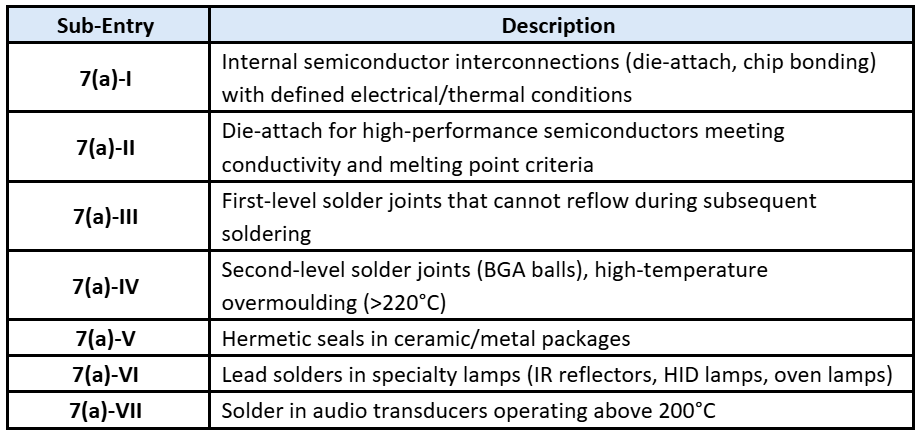
This directive replaces the long-standing exemption 7(a) with seven targeted sub-entries, each defining specific soldering applications.
Updated Sub-Entries
|
Expiry Date
All sub-entries expire on 31 December 2027.
Industry Impact
Manufacturers must remap all solder applications immediately. Any generic claims under “HMT solder” become invalid after December 2025.
2. Commission Delegated Directive (EU) 2025/2363
Reorganization of Lead in Glass, Ceramic, and Dielectric Components
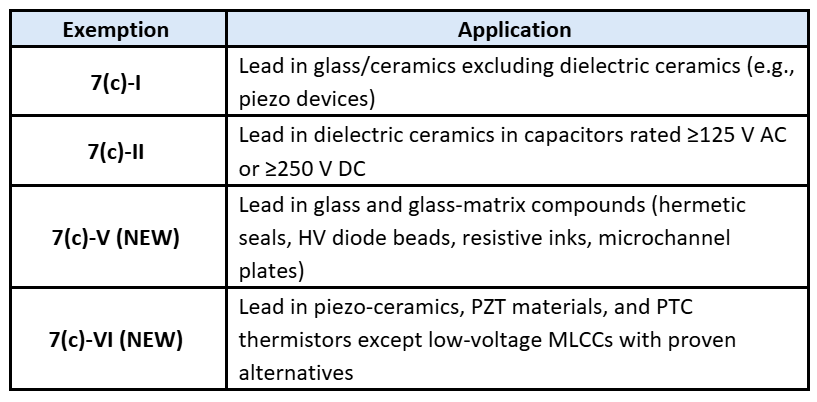
This amendment restructures all exemptions under 7(c), replacing outdated entries with four modern, application-specific sub-entries.
Updated Exemptions
|
Expiry Dates
• 7(c)-I → 30 June 2027
• 7(c)-II, 7(c)-V, 7(c)-VI → 31 December 2027
Industry Impact
Automotive sensors, industrial machinery, aerospace electronics, and semiconductor manufacturers must update technical files and prepare for substitution.
3. Commission Delegated Directive (EU) 2025/2364
Lead as an Alloying Element in Steel, Aluminium, and Copper
This update modernizes the long-standing “Series-6” exemptions 6(a), 6(b), and 6(c).
Key Changes
• Lower allowed lead concentration limits
• More application-specific sub-entries
• Clear expiry dates for all categories
Affected Components
• Machined steel parts
• Aluminium housings and cooling blocks
• Copper connectors, switches, and terminals
• Mechanical elements inside EEE assemblies
Expiry Window
Most exemptions now expire between 2026–2027 depending on application.
Industry Impact
Automotive and industrial manufacturers must verify alloy compositions, especially when using recycled metals that may exceed new lead thresholds.
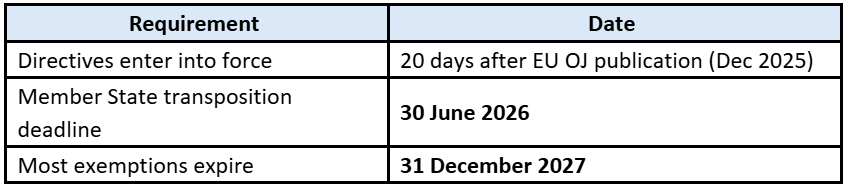
Implementation Timeline
|
What Manufacturers & Suppliers Must Do Now
1️⃣ Immediate BOM & Material Mapping: Every solder, alloy, glass, and ceramic application must align with the new sub-entries.
2️⃣ Update Supplier Documentation: DoCs, IEC 63000 technical files, and compliance declarations must reference updated exemption codes.
3️⃣ Start Substitution & Redesign Work: Any product expected to remain on the EU market beyond 2027 must transition to lead-free materials.
4️⃣ Validate Supplier Quality: Verify that metal, ceramic, and solder suppliers comply with new lead limits.
5️⃣ Manage Market Access Risks: Products using expired exemptions cannot be legally sold in the EU after their expiry date.
References:
i.EU - 2025/2364
ii.EU - 2025/2363
iii.EU - 2025/1802
Reach out to our regulation experts on chemical and product regulatory compliances