






















⚠ Compliance Alert · EU · CBAM
EU Sets Rules for Deducting Third-Country Carbon Prices Under CBAM: Certified Evidence Now Required
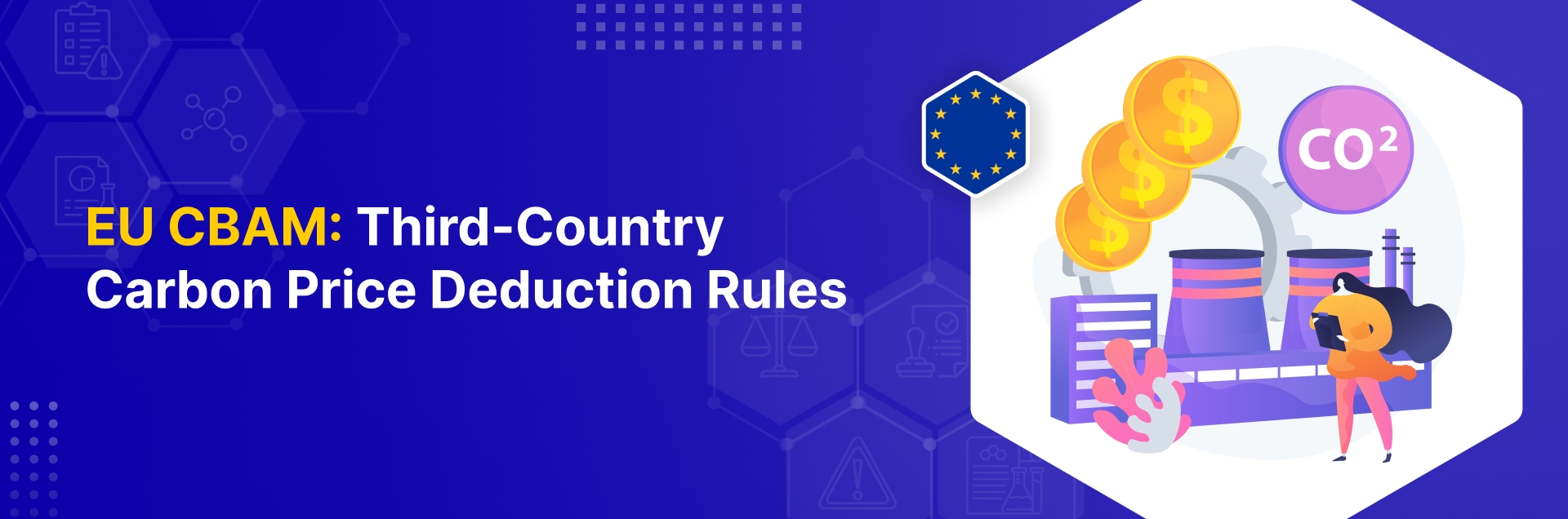
On 16 November 2026, the European Union adopted Regulation (EU) 2026/2498 under the Carbon Border Adjustment Mechanism (CBAM) Regulation (EU) 2023/956. It sets out how a carbon price effectively paid outside the EU reduces the number of CBAM certificates an importer must surrender, and what evidence is needed to support the claim. Only the net carbon price actually borne counts, and every claim must be certified by an accredited, independent person.
CBAM puts a carbon price on the embedded emissions of certain goods imported into the EU. Authorised CBAM declarants must buy and surrender CBAM certificates that correspond to those emissions. To avoid double charging, the CBAM Regulation allows the number of certificates to be reduced where a carbon price has already been effectively paid in the country of origin. The new regulation sets out the detailed rules for claiming that reduction.
Why This Can’t Wait
CBAM certificates are a direct cost on the embedded emissions of imported iron and steel, aluminium, cement, fertilisers, hydrogen and electricity. Suppliers in countries with an emissions trading system or carbon tax may already be paying a carbon price that can lower that cost. But the deduction is not automatic: without properly certified evidence, no deduction can be claimed and the full certificate obligation applies.
Compliance Timeline — Mark These Dates
1 January 2026 · Definitive period
CBAM’s definitive period began. Authorised CBAM declarants must buy and surrender certificates matching the embedded emissions of the goods they import.
16 November 2026 · Rules adopted
Regulation (EU) 2026/2498 sets the method and evidence rules for deducting carbon prices paid in third countries.
Now · Action needed
Start collecting certified, net-of-rebate carbon price evidence from non-EU suppliers so it is ready for your CBAM declaration.
What Counts Towards the Deduction
✅ Counts towards the reduction
- Net carbon price paid
The carbon price effectively paid in the country of origin, such as under an ETS or carbon tax - Correct conversion
Converted into a certificate reduction using the method set in the regulation - Certified evidence
Documentation certified by an accredited, qualified independent person
❌ Does not count
- Rebated or compensated amounts
Any rebates, free allocation or other compensation received in that country - Uncertified evidence
Supplier statements or documents without independent certification - Conflicted certifiers
Certification by anyone with a conflict of interest with the operator or declarant
Key Provisions of Regulation (EU) 2026/2498
- ✓Carbon price conversion: a set method converts the carbon price paid in a third country into a reduction in CBAM certificates.
- ✓Net price only: rebates, free allocation and other compensation must be deducted first.
- ✓Documentary evidence: defined proof that the carbon price was actually paid.
- ✓Certifier accreditation: qualification and accreditation requirements for the independent persons who certify evidence.
- ✓Independence rules: certifiers must be free from conflicts of interest with the operators or declarants concerned.
Who Is Affected
The update affects authorised CBAM declarants and importers of iron and steel, aluminium, cement, fertilisers, hydrogen and electricity, including steel and aluminium products such as fasteners, structural parts and other components. It also affects non-EU suppliers and installation operators in countries with carbon pricing, who will need to provide certified evidence to their EU customers.
Clear rules make the deduction process more predictable, but they also create new documentation work for importers and their suppliers outside the EU.
💬 Our Compliance Team’s Take
“This is a real cost-saving opportunity for importers, but only for those who can prove it. Carbon price evidence has to be net of rebates, independently certified and collected supplier by supplier. Start that conversation with your non-EU suppliers now, not when the declaration is due.”
— APA Engineering Regulatory Compliance Desk
What Companies Should Do Now
- 1Identify CBAM goods in your import portfolio and their countries of origin.
- 2Find out which suppliers operate under a carbon pricing mechanism.
- 3Ask suppliers for evidence of carbon price payment, net of any rebates or compensation.
- 4Make sure the evidence is certified by an accredited, independent person.
- 5Build carbon price data collection into your existing CBAM reporting process, ideally with CBAM reporting software that keeps supplier data in one place.
Key Questions Answered
Can carbon prices paid outside the EU reduce CBAM costs?
Yes. Where a carbon price has been effectively paid in the country of origin, it can reduce the number of CBAM certificates to surrender. Only the net price counts, after rebates, free allocation or other compensation, and it must be backed by certified evidence.
Why does CBAM allow deductions for carbon prices paid abroad?
To avoid double charging. Where a carbon price has already been effectively paid in the country of origin, the CBAM Regulation allows the number of certificates to be reduced so the same emissions are not priced twice.
Which goods are covered by CBAM?
Iron and steel, aluminium, cement, fertilisers, hydrogen and electricity, including downstream steel and aluminium products such as fasteners and structural parts.
What evidence is needed to claim a deduction?
Documentary evidence that the carbon price was paid, certified by an accredited, qualified independent person who has no conflict of interest with the operator or declarant.
What happens if a supplier cannot provide certified evidence?
No deduction can be claimed, and the importer must surrender the full number of CBAM certificates for the embedded emissions.
🚨 Bottom Line
The new rules give importers a defined route to recognise carbon costs already paid abroad and avoid double charging, but the benefit depends on accurate, certified evidence from suppliers outside the EU. Companies that build carbon price data collection into their CBAM processes now will be better placed to manage certificate costs and stay compliant. Use this update as the trigger to map your carbon-priced suppliers and add evidence collection to your CBAM compliance process this quarter. A regulatory watch service helps you catch the next CBAM change early.
Reference:
- Regulation (EU) 2026/2498 on carbon prices paid in third countries under Regulation (EU) 2023/956 (CBAM), EUR-Lex
- Regulation (EU) 2023/956 establishing a carbon border adjustment mechanism
Related reading
Need help claiming CBAM carbon price deductions?
Our 140+ compliance experts help importers map CBAM goods, collect supplier emissions and carbon price data, and keep CBAM reporting audit-ready.
✓ 150+ global customers ✓ 140+ compliance experts ✓ ISO 27001 & ISO 9001 certified ✉ compliance@apaengineering.com
Reach out to our regulation experts on chemical and product regulatory compliances