































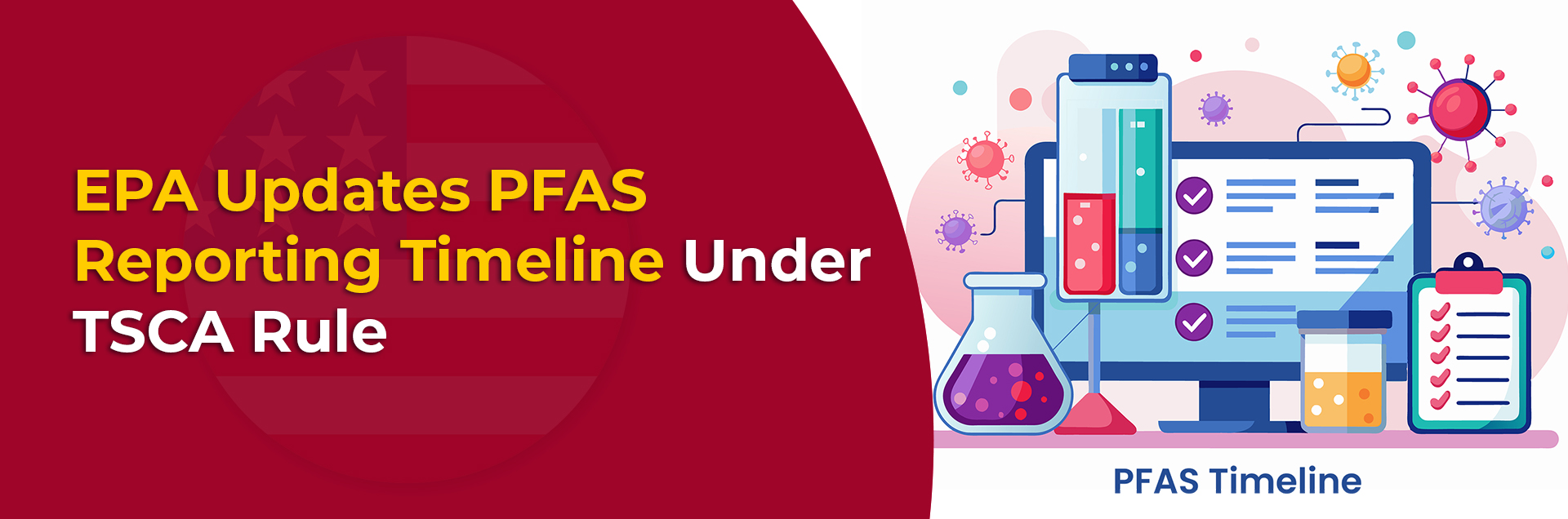
The EPA has extended the TSCA PFAS reporting start date for the second time, pushing the deadline to January 31, 2027 at the latest. This article breaks down what changed, what is still proposed, and what your organization should do now.
Background
What Is the TSCA Section 8(a)(7) PFAS Reporting Rule?
Finalized by the EPA on October 11, 2023, the TSCA Section 8(a)(7) rule requires companies to report detailed information about PFAS usage in products, manufacturing processes, and supply chains.
A critical detail many companies miss: the rule covers PFAS manufactured or imported for commercial purposes going back to January 1, 2011 — meaning historical data, not just current operations, must be reported.
Required reporting areas include:
- PFAS chemical identities (by CAS number where known)
- Usage in products and manufacturing processes
- Volume manufactured, imported, or processed
- Exposure routes and disposal information
- Worker exposure and environmental release data
Industries commonly affected:
Automotive
Aerospace
Textiles
Packaging & Coatings
Medical Devices
Chemical Manufacturing
Regulatory Timeline
History of Delays: TSCA PFAS Reporting Rule
-
Oct 2023Rule Finalized
EPA finalizes TSCA Section 8(a)(7) PFAS Reporting Rule. Original reporting window set for 2024. -
May 2025First Delay
EPA issues interim final rule. Reporting window moved to April 13 – October 13, 2026, with April 13, 2027 for small manufacturers reporting solely as article importers. -
Nov 2025Scope Narrowing Proposed
EPA proposes significant changes: article importer exemption, expanded de minimis thresholds. Public comment closed December 2025. -
Apr 2026 — LATESTSecond Delay Confirmed
EPA finalizes second delay. Reporting start date moved to January 31, 2027 at the latest, or 60 days after a forthcoming final revised rule.
Critical Update
Important: EPA Proposes to Narrow Rule Scope
Alongside the deadline delays, the EPA in November 2025 proposed significant changes to who must report under TSCA Section 8(a)(7). If finalized, these changes could substantially reduce compliance obligations for many companies:
Companies that import finished goods or components containing PFAS — rather than PFAS chemicals directly — may be exempted from reporting entirely. This proposed change is still under EPA review and has not been finalized. Do not assume this exemption applies to your business until the final rule is issued.
Additional proposed changes include expanded de minimis exemptions for lower-concentration PFAS uses. The EPA received public comments through December 29, 2025 and is expected to publish a final revised rule in 2026.
Risk Alert
Why the Delay Introduces Compliance Risk
Companies that pause preparation risk data gaps, incomplete historical records (the look-back goes to 2011), compressed timelines, and higher compliance costs closer to the deadline.
Specific risks for unprepared companies include:
- Gaps in PFAS supply chain inventories spanning 15 years of historical data
- Incomplete supplier disclosures — especially for multi-tier supply chains
- Higher compliance costs when preparation is compressed close to the deadline
- Increased enforcement risk once the reporting window opens
Early preparation remains the lowest-risk strategy regardless of when the final deadline is confirmed.
Action Plan
What Companies Should Do Now
-
PFAS Inventory Assessment
Identify all PFAS-containing materials across your operations and products. Include historical usage going back to January 1, 2011 as required by the rule.
-
Supplier Data Collection
Request PFAS disclosure from upstream suppliers using standardized questionnaires that reference TSCA Section 8(a)(7) requirements. Set clear supplier response deadlines.
-
Assess Your Article Importer Status
If your company imports finished goods or components rather than PFAS chemicals directly, assess whether the proposed article importer exemption may apply. Consult compliance counsel — do not assume exemption until the final rule is issued.
-
Compliance System Setup
Build structured workflows for electronic TSCA submission. The EPA’s reporting platform requires specific data formats — system preparation takes time. Start building now.
-
Gap Analysis and Pre-Compliance Documentation
Identify missing data and high-risk supply chain areas. Prepare internal audit-ready records rather than building them under deadline pressure.
APA Engineering’s PFAS compliance specialists help manufacturers and importers navigate reporting requirements, supply chain disclosure, and gap assessments — before deadlines hit.
Conclusion
The EPA’s April 2026 decision pushes the TSCA Section 8(a)(7) PFAS reporting start date to January 31, 2027 at the latest — but it does not reduce your company’s obligations. With a proposed scope narrowing also under review, organizations need to track both the timeline and the rule’s evolving requirements simultaneously.
Use the remaining window to build PFAS inventory data, engage suppliers, assess your article importer status, and implement compliant reporting systems before the deadline approaches.
Frequently Asked Questions
TSCA PFAS Reporting Rule — FAQ
Reach out to our regulation experts on chemical and product regulatory compliances