





















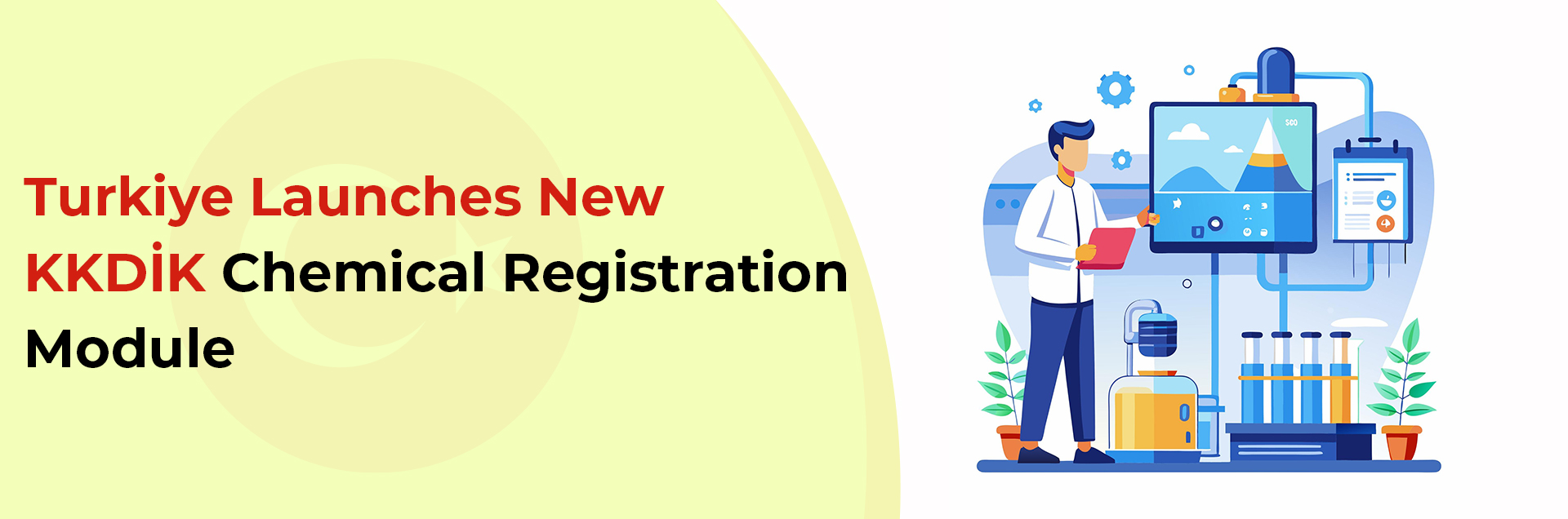
The Turkish Ministry of Environment, Urbanisation and Climate Change has officially announced a major advancement in the KKDİK (Türkiye REACH) regulatory system. The long-anticipated KAYIT (Registration) Module within the KKS Portal is now fully operational, allowing companies to begin submitting complete chemical registration dossiers.
Located under KKS Portal → Madde Yönetimi → KAYIT, the module enables manufacturers, importers, downstream users, consortia, and Only Representatives (ORs) to upload and submit KKDİK registration dossiers directly through the platform.
This marks one of the most significant operational milestones in Türkiye’s chemicals management framework to date.
What the Update Means
With the activation of the KAYIT module, KKDİK enforcement is expected to accelerate. All stakeholders placing chemicals on the Turkish market—especially those supplying the automotive, electronics, plastics, coatings, adhesives, detergents, metallurgy, and textile sectors—must now ensure full compliance.
Entities affected include:
• Turkish manufacturers producing ≥1 tonne/year
• Importers of chemicals, mixtures, or substances in articles
• Only Representatives (ORs) appointed by non-Turkish suppliers
• Downstream users depending on imported or jointly registered substances
• Consortia, SIEFs, and Lead Registrants involved in joint submissions
Non-registered substances may face customs blocks, market restrictions, or supply chain delays.
Immediate Actions for Companies
To ensure compliance, companies are strongly advised to:
1. Verify Substance Inventory
• Assess all substances manufactured or imported into Türkiye
• Check tonnage bands (≥1 tpa, 10 tpa, 100 tpa, 1000 tpa)
• Confirm if the substance has a lead registrant or requires independent registration
2. Log In and Review KAYIT Module
• Access Madde Yönetimi → KAYIT
• Check the status of each substance: pre-registered, requiring registration, or linked to a joint submission
3. Prepare Complete Registration Dossiers
Registration Dossiers include:
• Classification & Labelling (C&L)
• Chemical Safety Report (CSR)
• Safety Data Sheet (SDS)
• Use descriptions & exposure scenarios
• Study summaries / robust study summaries
Identify your role: Lead Registrant, Member, or Independent Registrant etc..
4. Coordinate With SIEF / Consortium
• Confirm Lead Registrant
• Align dossier content with joint submission requirements
• Arrange Letters of Access (LoA) where needed
Impact on Global and Industrial Supply Chains
i. International exporters must ensure KKDİK compliance before shipping products to Türkiye, as non-registered substances may be stopped at customs.
ii. Automotive suppliers may face implications for APQP, PPAP, and IMDS reporting due to restricted chemicals.
iii. Electronics manufacturers using flame retardants, polymers, solder materials, or surface treatments may need to complete registrations promptly.
iv. Plastics, coatings, detergents, metallurgy, and chemical industries must prepare for high compliance pressure as stabilizers, pigments, monomers, catalysts, and additives all fall under KKDİK.
Importance of the Update
KKDİK is considered one of the world’s strictest REACH-like regulations. Now that the KAYIT module is live, Türkiye’s regulatory enforcement will intensify. Companies failing to register substances risk:
• Customs refusals
• Market entry barriers
• Production delays
• Supply chain disruptions
• Commercial and reputational damage
Businesses supplying the Turkish market must update their compliance strategy immediately to ensure uninterrupted operations.
Reference: KKDIK Update
Reach out to our regulation experts on chemical and product regulatory compliances