























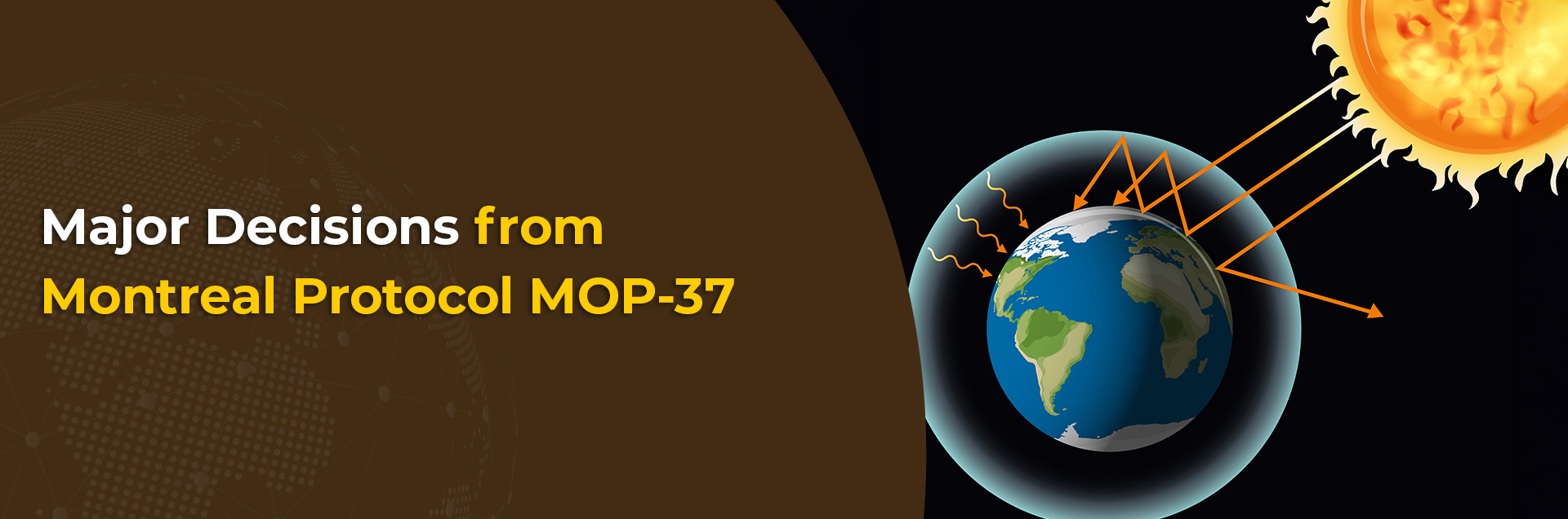
The 37th Meeting of the Parties (MOP-37) to the Montreal Protocol took place in Nairobi, Kenya, from 3–7 November 2025, focusing on global progress in protecting the ozone layer and managing ozone-depleting substances (ODS). The official decisions are published in MOP-37-9 Add-1E.
Significance of the decision:
• The ozone layer shields the planet from harmful UV radiation, and the Montreal Protocol has been crucial in reducing the use of ODS. However, new and ongoing challenges remain, including:
• Emissions from replacement gases such as HFCs
• Large stockpiles of old refrigerants
• Insufficient monitoring capabilities in certain regions
Major Outcomes from MOP-37
1. Strengthened Global Monitoring
The Secretariat will enhance tracking of controlled substances, with a focus on regions where monitoring gaps persist.
2. Funding Support for Developing Countries
New funding decisions will help developing nations meet their compliance obligations under the Protocol.
3. Budget and Technical Approvals
Budgets for 2026 and updates to Technical Panels responsible for evaluating controlled substances were approved.
4. Deferred Topics
Several complex topics, including the use of controlled substances as feedstock, were postponed for future negotiations.
Impact on Stakeholders
1. Manufacturers (Refrigeration & AC): Stricter compliance requirements will apply to refrigerants, leak management, and reporting systems.
2. Policymakers & Regulators: Governments will need to strengthen monitoring frameworks and ensure adequate funding support for developing regions.
3. Environmental & ESG Teams: Greater focus will be required on ozone protection performance, emissions tracking, and climate-linked reporting.
4. Researchers & Innovators: There are new opportunities for developing low-GWP refrigerants, advanced cooling technologies, and better emissions monitoring tools.
Next Steps for Businesses
Organizations handling refrigerants should:
• Review their refrigerant usage and stockpiles
• Prepare for enhanced compliance and reporting
• Shift toward climate-friendly alternatives
• Consider regulatory developments when designing new products or managing end-of-life cooling equipment
Continued attention to Secretariat updates and future meetings will be essential as global controls evolve.
Reference: MOP-37-9
Reach out to our regulation experts on chemical and product regulatory compliances