

























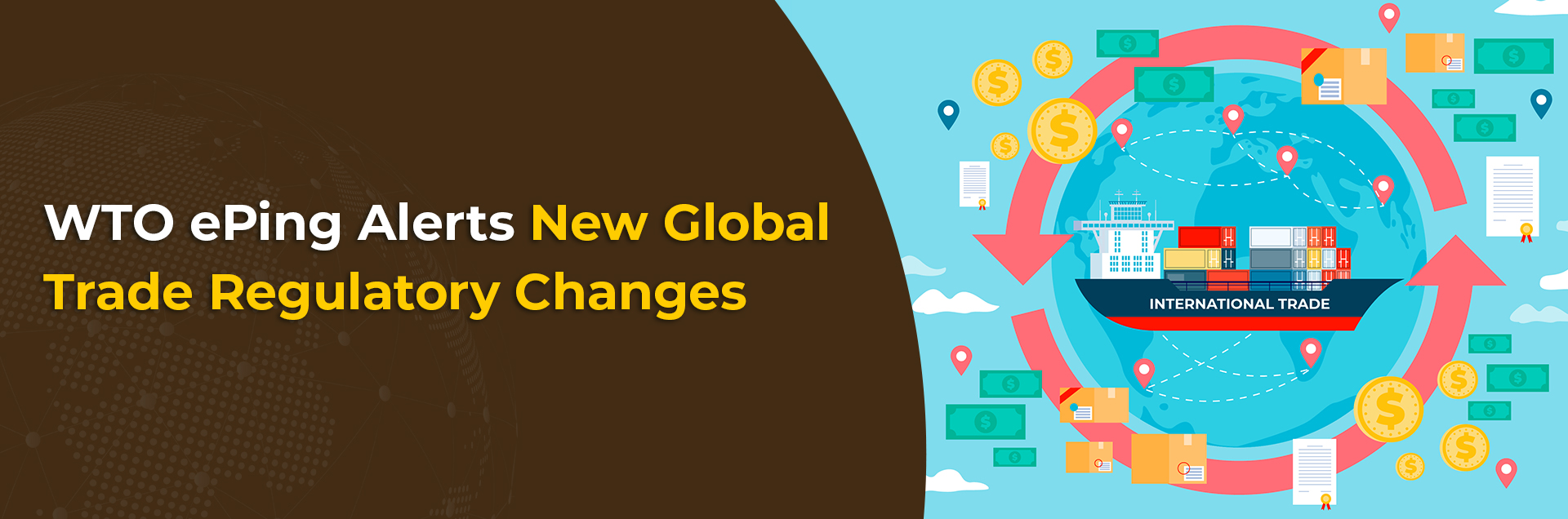
Recent WTO ePing notifications are signaling new and upcoming regulatory changes across multiple countries, covering product standards, safety rules, and trade compliance requirements — providing businesses with early warning of emerging regulations before they become mandatory.
What Happened
WTO member countries have published new SPS (Sanitary and Phytosanitary) and TBT (Technical Barriers to Trade) notifications, outlining proposed regulatory changes affecting product safety, labeling, and import requirements across global markets.
Notification Types Covered
SPS Notifications — Sanitary and Phytosanitary measures covering food safety, animal health, and plant protection standards.
TBT Notifications — Technical Barriers to Trade covering product safety standards, testing requirements, labeling rules, and conformity assessment procedures.
Key Dates & Timeline
- Notification updates: Ongoing WTO ePing alerts
- Comment period: Varies by country — typically 30–90 days
- Final adoption: After national regulatory approval process
- Enforcement: Post-publication in national gazettes
What Companies May Face
- New labeling requirements
- Updated safety standards
- Revised testing procedures
- Changes in import documentation
Who Is Affected
- Exporters and importers globally
- Global manufacturers
- Supply chain managers
- Regulatory compliance teams
What Companies Should Do
- Monitor WTO ePing alerts regularly for target markets
- Review draft regulations during the comment period
- Prepare compliance updates in advance of enforcement
- Adjust product standards and documentation proactively
WTO ePing notifications provide early warning of global regulatory changes, giving businesses a critical window to prepare for upcoming trade and compliance requirements before enforcement begins.
Reach out to our regulation experts on chemical and product regulatory compliances