






























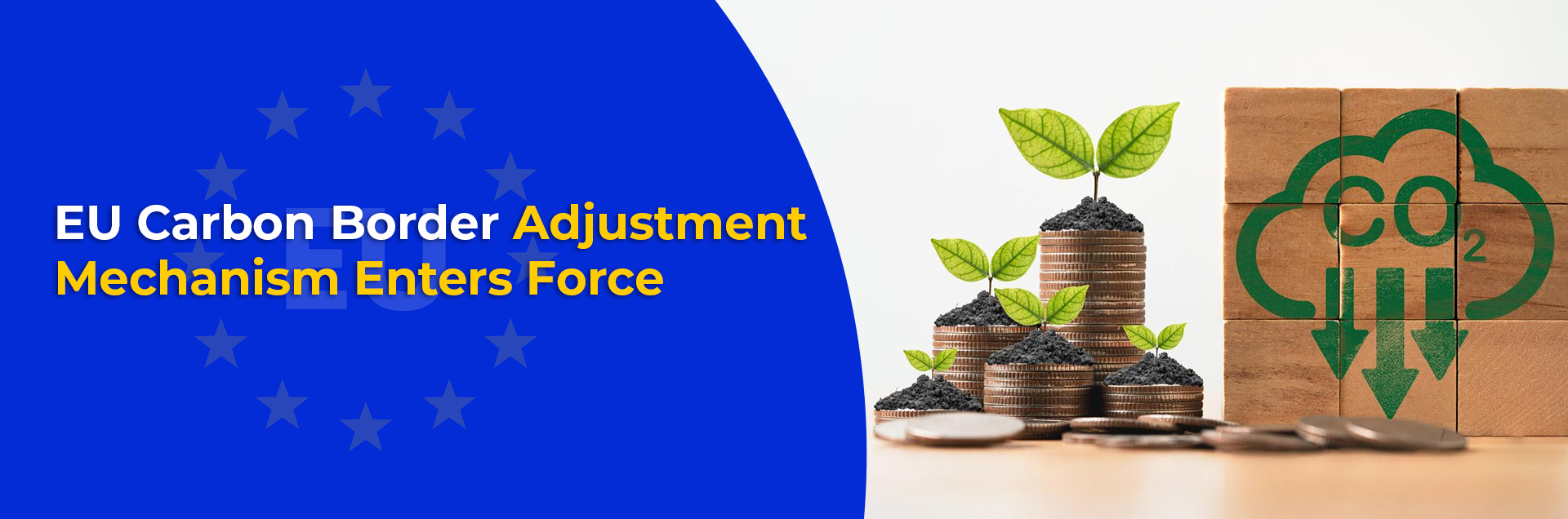
The European Union has officially implemented the Carbon Border Adjustment Mechanism (CBAM), a landmark climate policy designed to ensure that imported carbon-intensive goods face similar carbon costs as those produced within the EU. CBAM complements the EU Emissions Trading System (EU ETS) and aims to prevent carbon leakage while supporting EU climate objectives.
Operational Rollout Across Member States
The CBAM launch involved synchronized deployment of digital and customs systems, including:
- CBAM Registry: Central platform for applications and compliance tracking.
- EU Customs Single Window & TARIC Integration: Real-time verification of CBAM authorizations at customs.
- National Customs Systems: Standardized processes for authorization validation and monitoring of CBAM declarations.
Early reports indicate smooth operations, with no major disruptions to imports and stable customs processing times.
Early Operational Data (1–7 January 2026)
The first week of CBAM operation highlights strong engagement and sector-specific exposure:
| Metric | Value | Notes |
|---|---|---|
| Economic operators applied for CBAM authorisation | 12,000+ | Demonstrates proactive preparation |
| Authorised CBAM declarants | 4,100+ | Eligible to import CBAM-covered goods |
| Customs declarations processed | 10,483 | Mainly iron & steel |
| Other goods declared | Aluminium, fertilisers, cement | Electricity and hydrogen still preliminary |
| Major exporting countries | Turkey, China, India, Canada, Taiwan, Vietnam | Covers key global exporters |
| Top EU importers | Belgium, Spain, Romania, Netherlands, France, Germany | Concentration in industrial hubs |
Insight: Iron & steel represented 98% of declared volumes, showing the sector’s immediate CBAM impact.
Compliance Requirements for Importers
Importers must follow key CBAM obligations:
- Authorisation: Only registered declarants can import CBAM-covered goods.
- Reporting: Annual reporting of embedded carbon emissions (Scope 1, 2, and upstream).
- Certificates & Payments: CBAM certificates will be issued in 2027; first surrender deadline is 30 September 2027 for 2026 imports.
- Thresholds & Simplifications: Low-volume operators may benefit from de minimis thresholds (50 tonnes CO₂/year).
- Penalties: Non-compliance can result in fines, customs delays, or rejected imports.
Strategic Implications
CBAM represents a paradigm shift in trade and climate policy:
- Encourages global suppliers to reduce carbon intensity.
- Forces importers to adjust pricing, sourcing, and reporting.
- Impacts global trade flows for exporters like China, India, and Turkey.
- Provides EU producers in a level playing field, avoiding disadvantages from international carbon policies.
Long-term goal: Incentivize global decarbonization while preventing carbon leakage from EU climate regulations.
Next Steps for Businesses
- Register in the CBAM Registry if not already authorised.
- Compile verified emissions data for CBAM-covered imports.
- Train compliance teams for certificate management and annual reporting.
- Review supplier contracts to ensure accurate carbon content disclosure.
- Plan for CO₂ certificate costs starting in 2027.
Reach out to our regulation experts on chemical and product regulatory compliances