

















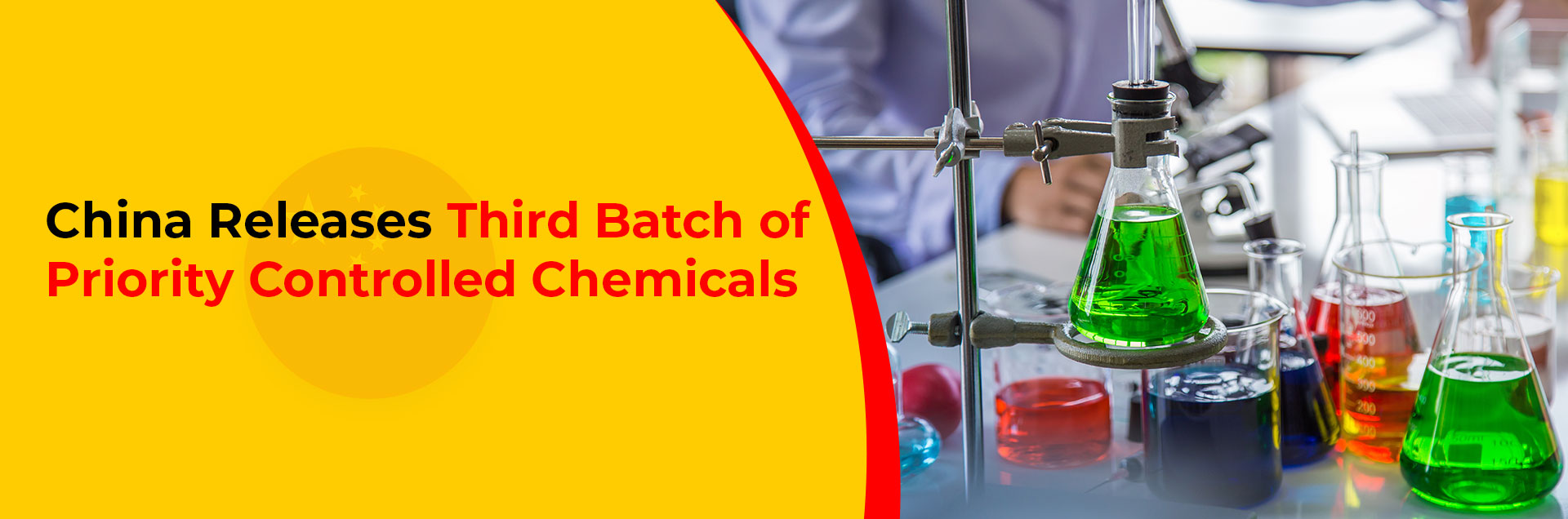
China’s Ministry of Ecology and Environment (MEE) and the National Disease Control and Administration jointly issued the Third Batch of the China Inventory of Priority Controlled Substances (Draft for Comments). This update is part of China’s Action Plan for the Control of New Pollutants (No. 15 [2022]), which mandates the dynamic expansion of the national priority-controlled substances list.
The draft includes 24 high-risk chemicals and is open for public consultation until December 2, 2025. Stakeholders can submit feedback through written documents or electronically to the MEE.
Focus of the Third Batch
The newly listed chemicals primarily affect sectors including:
• Petrochemicals
• Plastics & Rubber
• Pharmaceuticals
• Textiles & Dyes
• Coatings & Pesticides
• Leather
• Electroplating
Hazardous Characteristics Considered
The selection focused on substances exhibiting one or more of the following risks:
• Environmental persistence and bioaccumulation
• Chronic aquatic toxicity (Category 1)
• Carcinogenicity, mutagenicity, and reproductive toxicity (Categories 1 & 2)
• Specific target organ toxicity (from repeated exposure, Category 1)
• Endocrine disruption potential
Additionally, substances already under strict domestic control or regulated internationally were considered. The first two batches had already listed 40 chemicals, covering carcinogens, persistent organic pollutants, and heavy metals across multiple industries.
Important Management Requirements for Enterprises
Enterprises handling these chemicals must comply with updated regulations in the following areas:
1. Environmental Impact Assessment (EIA)
• Report the type, quantity, and usage of listed chemicals in project EIAs
• Analyze transformation, migration, and emission pathways during chemical reactions
• Include newly listed chemicals as assessment factors
2. Pollutant Discharge Permits
• Report designed or actual production values of chemicals in raw or auxiliary materials
• Ensure all discharges are within permitted limits
3. Soil and Facility Management
• Construct and operate corrosion and leakage prevention systems for production installations, storage tanks, pipelines, and wastewater facilities
• Submit pollution prevention plans for dismantling projects 15 working days in advance to local authorities
Implications for Enterprises
Companies using these chemicals will need to:
• Conduct immediate self-assessments against new regulations
• Establish robust tracking and reporting systems for EIAs, permits, and daily operations
• Upgrade environmental protection facilities to prevent leaks and monitor emissions
Impact on Competitiveness
• Traditional chemical processes using high-risk substances may gradually lose competitiveness
• Enterprises are encouraged to invest in R&D for safer alternatives, supporting sustainable development
Next Steps for Stakeholders
• Submit feedback to MEE by December 2, 2025
• Monitor official announcements for the final Third Batch
• Review internal processes to ensure compliance with evolving chemical control regulations
Stay Informed: Continuous monitoring of China’s chemical management regulations is essential for companies operating in high-risk sectors to maintain compliance and a competitive advantage.
Reference: China Press Release
Reach out to our regulation experts on chemical and product regulatory compliances