

























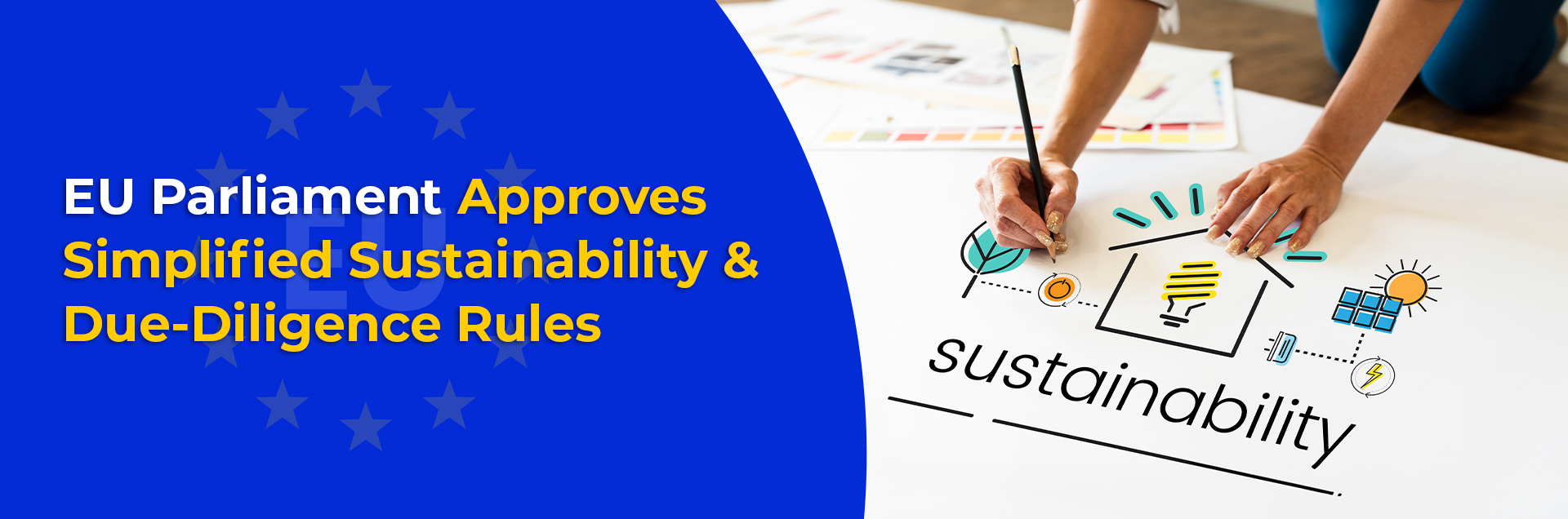
EU Parliament Backs Major Simplification of Sustainability Reporting & Supply-Chain Due Diligence
European Parliament approved a landmark reform package to simplify two major EU sustainability regulations:
• CSRD – Corporate Sustainability Reporting Directive
• CSDDD – Corporate Sustainability Due Diligence Directive
The changes aim to reduce administrative burden, especially for SMEs, while ensuring that the largest companies continue to report ESG performance and manage human rights and environmental risks across their supply chains.
Changes Under CSRD (Reporting Rules)
1. Smaller Scope – Fewer Companies Must Report
Only large companies must report if they exceed:
• 1,750+ employees, and
• €450 million turnover.
This excludes many mid-sized organizations from mandatory sustainability reporting.
2. ESG Reporting Requirements Simplified
• Reduced qualitative detail
• Sector-specific standards become optional
• Focus shifts to core material impacts
3. Climate Transition Plans Removed
Companies are no longer required to publish transition plans aligned to the Paris Agreement, reducing long-term climate documentation efforts.
4. Lower Burden on SMEs
SMEs will face less pressure from customers demanding additional ESG data. Reporting remains voluntary, not mandatory.
5. EU Digital Portal for Support
A new EU-wide digital platform will provide:
• Free templates
• Guidance
• Reporting tools
Lowering compliance costs significantly.
Changes Under CSDDD (Due-Diligence Rules)
1. Applies Only to Very Large Corporations
CSDDD now applies only to companies with:
• 5,000+ employees, and
• €1.5 billion turnover
This removes thousands of businesses from legally binding supply-chain due diligence.
2. Risk-Based Approach
Companies must assess:
• Where human rights violations are likely
• Where environmental harm is probable
No need for full supply-chain screening.
3. Reduced Burden on Small Suppliers
Large firms may collect information from small suppliers only when essential, offering relief to SMEs in the automotive, electronics, chemical, and textile sectors.
4. National-Level Enforcement
Member States will manage enforcement and liability.
Victims retain the right to compensation for proven harm.
Importance for Industry
OEMs & Tier-1 Suppliers
• Still responsible for reporting (CSRD)
• Must conduct risk-based due diligence (CSDDD)
• Can expect simpler templates and more flexibility
Tier-2 & Tier-3 Suppliers
• Reduced ESG reporting pressure
• Due-diligence requests will be targeted, not exhaustive
ESG / Compliance Teams
• Assess if your company still falls under CSRD/CSDDD thresholds
• Update reporting structures
• Shift from blanket checks to risk-focused assessments
Next Steps & Timeline
• 18 November 2025: Parliament–Council trilogue negotiations begin
• Late 2025: Final adoption expected
• Companies should begin preparing internal processes for the simplified requirements
Reference: EU ESG
Reach out to our regulation experts on chemical and product regulatory compliances