
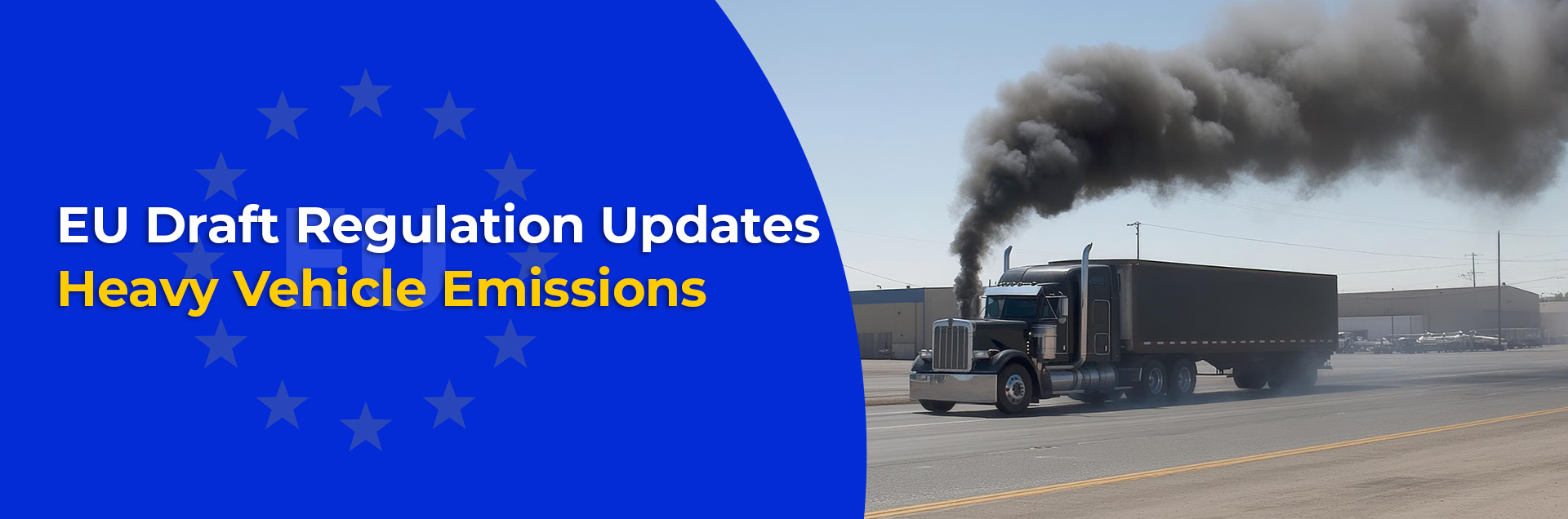
The European Union (EU) has formally notified a draft delegated regulation to updating emissions standards for heavy-duty vehicles, including trucks and buses. This notification, listed under G/TBT/N/EU/1191 in the WTO ePing system, falls under the WTO Technical Barriers to Trade (TBT) Agreement, ensuring transparency and allowing global stakeholders to review proposed technical regulations before implementation.
The draft regulation proposes amendments to Regulation (EU) 2024/1257, focusing on durability multipliers for gaseous pollutants from heavy-duty vehicles in categories M3, N2, and N3. These multipliers adjust emissions limits to account for deterioration of vehicle emissions control technologies over their operational life, giving manufacturers clearer guidance and aligning performance expectations across vehicle categories.
Technical Highlights
- Durability Multipliers Updated:
The draft regulation introduces a uniform 1.2 multiplier for all heavy-duty vehicles covered, simplifying compliance and standardizing emissions accounting.
- Annex IV Amendments:
Annex IV now incorporates the latest technical data from emissions testing of Euro 7 heavy-duty vehicles, ensuring that measurements reflect real-world deterioration.
- Scope:
Applies to heavy-duty buses and trucks of categories M3 (buses), N2 (medium trucks), and N3 (heavy trucks up to 16 t+).
- Objective:
To ensure emissions limits remain consistent and accurate over the lifetime of vehicles, enhancing environmental compliance while reducing uncertainty for manufacturers.
Regulatory & Trade Context
- WTO TBT Compliance:
By notifying WTO members, the EU provides an opportunity for stakeholders worldwide to comment, ask questions, and prepare for potential trade impacts.
- Transparency:
Early notification reflects the EU’s commitment to openness and regulatory clarity, helping trading partners adapt to new standards without disruptions.
- Alignment with Climate Goals:
The update supports the EU’s broader climate strategy, aiming to reduce air pollution from heavy-duty vehicles and meet EU climate neutrality targets.
Why This Matters for Industry
- Manufacturers:
Heavy vehicle makers exporting to the EU must adapt designs to meet updated emissions durability requirements.
- Suppliers:
Suppliers of exhaust systems and after-treatment technologies will need to validate long-term performance under the new multipliers.
- Traders & Exporters:
Understanding the draft regulation is crucial for market access planning and risk management.
- Global Standards:
EU technical regulations often influence global vehicle emission norms, impacting non-EU heavy vehicle markets.
Next Steps
- Comment Period: WTO members may submit comments or questions during the notification period.
- Finalization: Once the comment period closes, the EU may adopt the delegated regulation, applying it across all Member States.
- Implementation: Heavy-duty vehicle compliance testing and certification processes will incorporate updated durability multipliers, affecting production planning and testing strategies.
Conclusion
The EU’s draft regulation updating heavy-duty vehicle emissions for durability multipliers demonstrates a continued commitment to cleaner air and climate targets, while also ensuring transparency for international trade. Manufacturers, suppliers, and exporters need to monitor these changes closely to ensure compliance and maintain market access.
Source:
Reach out to our regulation experts on chemical and product regulatory compliances