







































Client Background
A global off-road vehicle OEM experienced critical HVAC performance degradation during high-temperature field operation. With over 25 years of HVAC and Thermal Management expertise, APA Engineering was engaged to diagnose the issue and improve condenser performance to meet demanding off-road operating conditions.
1. Engineering Challenge
During operation at 45°C ambient temperature, the vehicle HVAC system failed to meet cooling performance requirements.
Observed Symptoms
- ● Insufficient cabin cooling under peak load
- ● Elevated compressor discharge temperatures
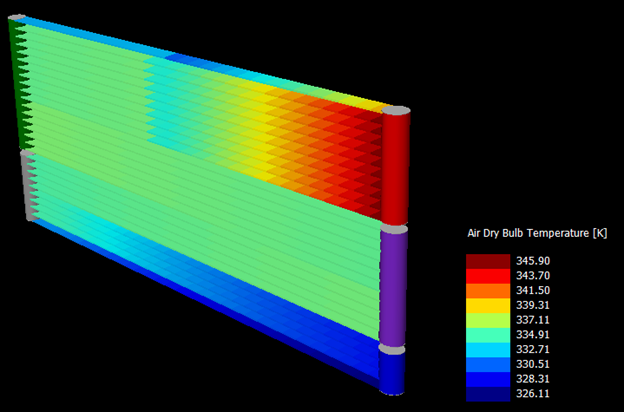
- ● Non-uniform airflow distribution across the condenser face
Root Cause Analysis
Initial assessment revealed a non-optimized microchannel condenser design, characterized by:
- ● Improper tube-pass distribution
- ● Incorrect microchannel port configuration
- ● Non-optimal fin density (FPI)
- ● Poor airflow uniformity caused by shroud and packaging constraints
These factors collectively resulted in insufficient heat rejection under extreme ambient conditions.
2. APA Engineering Methodology
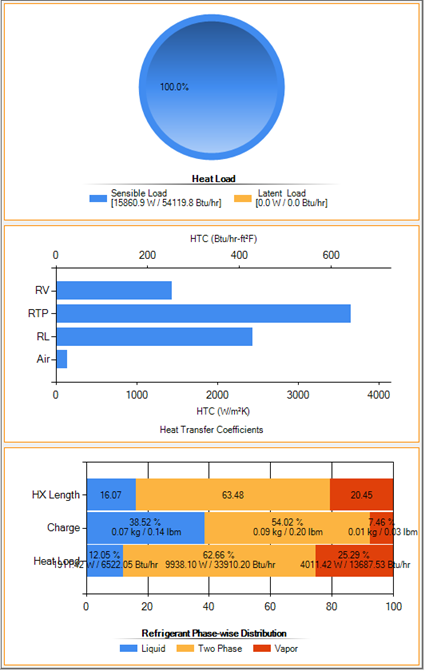
APA Engineering conducted a detailed condenser performance analysis using CoilDesigner, integrating geometric, thermal, and operating boundary conditions.
Key Simulation Inputs
- ● Condenser Type: Microchannel (MPE)
- ● Total Tubes: 28
- ● Pass Configuration: 11 + 7 + 5 + 5
- ● Tube Width: 20 mm
- ● Microchannel Ports: 20 per tube
- ● Fin Type: Louvered aluminum
- ● Fin Density: ~22 FPI
- ● Air Inlet Conditions: 45°C, 4.6 m/s
- ● Refrigerant: R134a
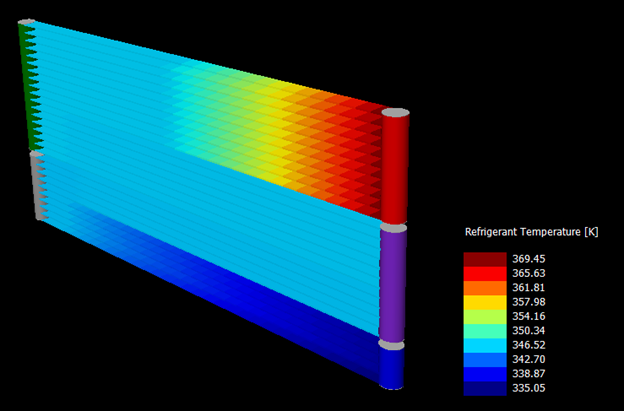
- ● Refrigerant Inlet Temperature: 98°C
- ● Mass Flow Rate: 395 kg/h
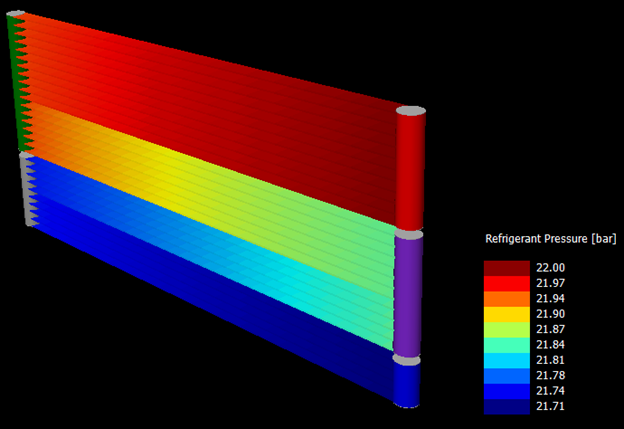
- ● Estimated Condensing Pressure: ~22 bar(a)
Critical Parameters Evaluated
- ● Tube-pass sequencing and refrigerant distribution
- ● Hydraulic diameter and internal pressure drop
- ● Fin pitch, louver geometry, and air-side heat transfer resistance
- ● Airflow uniformity across the condenser face
- ● Condensation and subcooling zone stability
3. Key Findings & Design Optimization
Issues Identified
- ● Maldistribution of refrigerant across multiple passes
- ● Inefficient upstream/downstream pass sequencing
- ● Reduced air-side heat transfer due to sub-optimal fin configuration
- ● Local airflow starvation across sections of the coil
Design Improvements Implemented
- ● Redesigned tube-pass logic for balanced refrigerant flow
- ● Increased microchannel port count to enhance internal heat transfer
- ● Optimized fin density and louver geometry for improved air-side performance
- ● Recommended shroud modifications and airflow deflectors to improve face velocity uniformity
4. Simulation Results (Post-Optimization)
| Parameter | Before Optimization | After APA Design |
| Heat Rejection Capacity | ~11 kW | 16.5 kW |
| Target Capacity | 15.5 kW | Met / Exceeded |
| Refrigerant Subcooling | < 4 K | 10 K |
| Compressor Discharge Temperature | High | Significantly Reduced |
| Airflow Distribution | Non-uniform | Uniform |
Outcome
The optimized condenser delivered a 35–40% improvement in heat rejection, restored adequate subcooling, reduced compressor thermal stress, and ensured stable HVAC operation under peak off-road thermal loads.
5. Final Deliverables
APA Engineering provided the OEM with:
- ● Complete CoilDesigner simulation models and performance reports
- ● Optimized microchannel geometry and tube-pass configuration
- ● Airflow improvement and shroud design recommendations
- ● Production- and sourcing-ready engineering documentation
6. Conclusion
Through advanced simulation-driven design optimization, APA Engineering successfully enhanced condenser performance for extreme off-road applications. The solution ensured robust HVAC reliability, improved system efficiency, and long-term durability under harsh environmental conditions.
APA Engineering
Your End-to-End Partner for HVAC & Thermal Management Simulation and Development
👉 Talk to Our Thermal Engineering Experts