



































What Is Position Mapping?
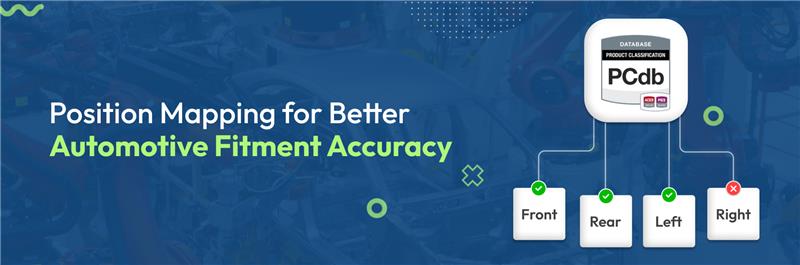
Position mapping is the process of identifying where a part is located within a larger assembly or systems such as an exhaust system, braking system, or suspension setup—and assigning a clear, standardized position name to it.
Why Position Mapping Matters in Automotive Cataloging
Position mapping is very important in automotive cataloging because it ensures every part is clearly identified, accurately located, and correctly understood within a vehicle assembly. Why it matters:
- ● Avoids Confusion Between Similar Parts
- ● Improves Fitment Accuracy
- ● Enhance Search & Navigation in Online Stores
- ● Prevents Incorrect or Duplicate Entries
- ● Supports ACES®/PIES® Data Standards
- ● Helps Technicians & Customers Understand the Assembly
- ● Reduces Cataloging Mistakes
Steps for Better Automotive Data Accuracy
1. Review the Diagram and parts number
Use the assembly diagram and part number to locate where the part physically belongs.
2. Validate Terminology with PCDB
Confirm the correct part name and classification based on PCDB standards.
3. Assign the Correct Position
Apply PCDB position terms such as Left/Right, Front/Rear, or position numbers based on the diagram.
4. Handle Quantities Properly
If a part appears multiple times, create separate entries for each position.
5. Check for Mismatches
Flag any missing, extra, or incorrect parts between part number and the diagram.
6. Finalize the Mapping
Record the validated terminology and position in your cataloging system.
The Value of APA Expertise in Position Mapping
Position mapping is essential for delivering accurate, search-ready automotive catalogs. When supported by the right standards and tools, the process becomes seamless and highly reliable. APA Engineering brings unmatched expertise in PCDB standards, and data validation helping brands achieve superior catalog accuracy, eliminate errors, and accelerate their go-to-market performance.
To find out more about Position Mapping