






















Overview
The European Commission has published a detailed Questions & Answers (Q&A) document outlining its proposed Environmental Omnibus package, a legislative initiative aimed at simplifying EU environmental laws and reducing administrative burdens for businesses.
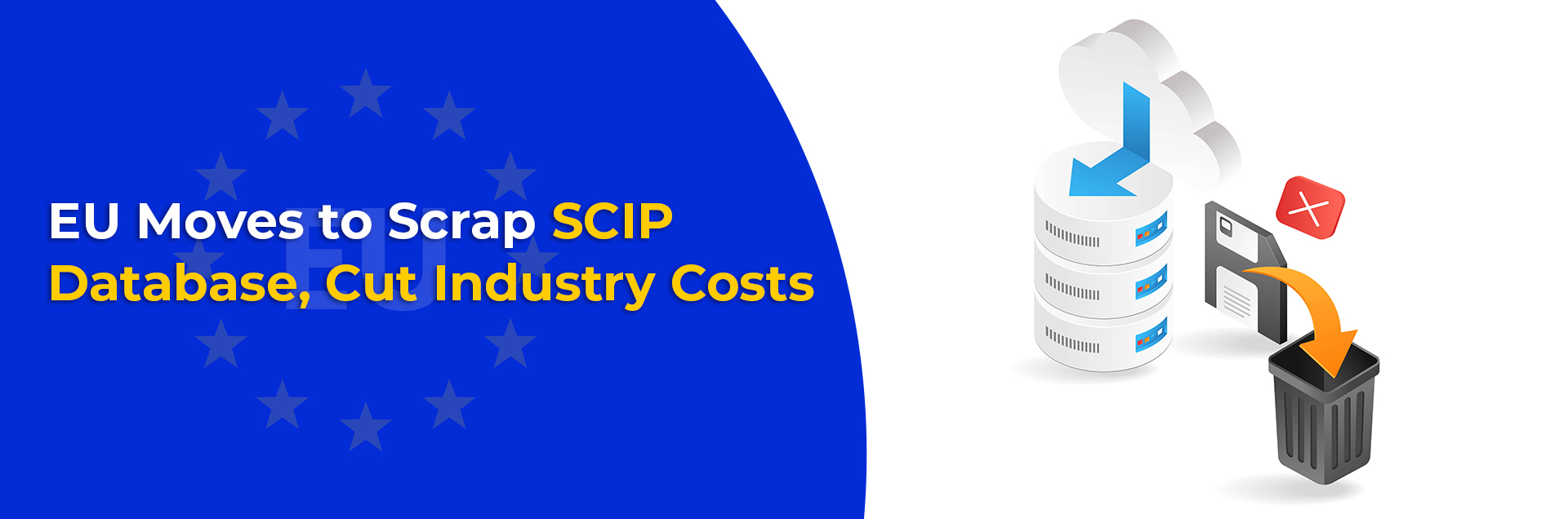
A key element of the proposal is the planned repeal of the Substances of Concern in Products (SCIP) database under the EU Waste Framework Directive. According to the Commission, removing this requirement could generate annual compliance cost savings of at least €225 million for industry.
The proposal forms part of the Commission’s broader effort to enhance EU competitiveness, streamline regulatory obligations, and modernise environmental governance—while maintaining existing levels of environmental protection.
Background: What Is the SCIP Database?
The SCIP database (“Substances of Concern in Products”) was established under the Waste Framework Directive (2008/98/EC) and is administered by the European Chemicals Agency (ECHA).
It requires companies placing articles on the EU market to submit information on substances of very high concern (SVHCs). The objective is to support waste operators and recyclers by improving visibility of hazardous substances during the product lifecycle.
While SCIP has enhanced transparency in chemical reporting, the Commission now considers its administrative complexity and cost burden to outweigh its practical benefits, particularly as new digital tools become available.
Proposal Under the Environmental Omnibus
a. Repeal of the SCIP Reporting Obligation
The Commission proposes amending the Waste Framework Directive to abolish the legal obligation for companies to submit data to the SCIP database.
This move is intended to eliminate overlapping reporting requirements and reduce administrative complexity for manufacturers, importers, and distributors operating in the EU market.
b. Estimated Cost Savings
According to the Commission’s official Q&A and supporting documents, repealing SCIP is expected to deliver at least €225 million in annual savings for European businesses.
These savings would primarily stem from reduced reporting efforts, especially companies supplying complex products with multiple components containing SVHCs.
c. Rationale for the Change
The Commission highlights several reasons for the proposed repeal:
- High administrative burden, particularly for SMEs and global suppliers
- Limited practical use of SCIP data in waste treatment processes
- The emergence of digital alternatives, such as the Digital Product Passport
- Alignment with the One Substance, One Assessment (OSOA) framework
- Reduction of duplicative EU data collection obligations
Broader Context: Environmental Omnibus Package
The Environmental Omnibus is one of several simplification initiatives launched by the Commission in 2025 under its Competitiveness Compass strategy.
The package seeks to:
- Reduce regulatory and administrative burdens across environmental legislation
- Streamline permitting and compliance procedures
- Maintain EU environmental standards while avoiding unnecessary complexity
Within this framework, the proposed SCIP repeal represents a targeted regulatory adjustment designed to modernise EU environmental rules and improve economic efficiency.
What Happens Next?
- Commission Proposal: Published alongside official Q&A and legislative texts
- European Parliament & Council: Begin negotiations under the ordinary legislative procedure
- Adoption & Entry into Force: Changes will apply only after approval by both co-legislators
Until adopted, the proposal remains subject to amendment during the legislative process.
Source: EU Moves to Scrap SCIP Database
Reach out to our regulation experts on chemical and product regulatory compliances