






























Overview
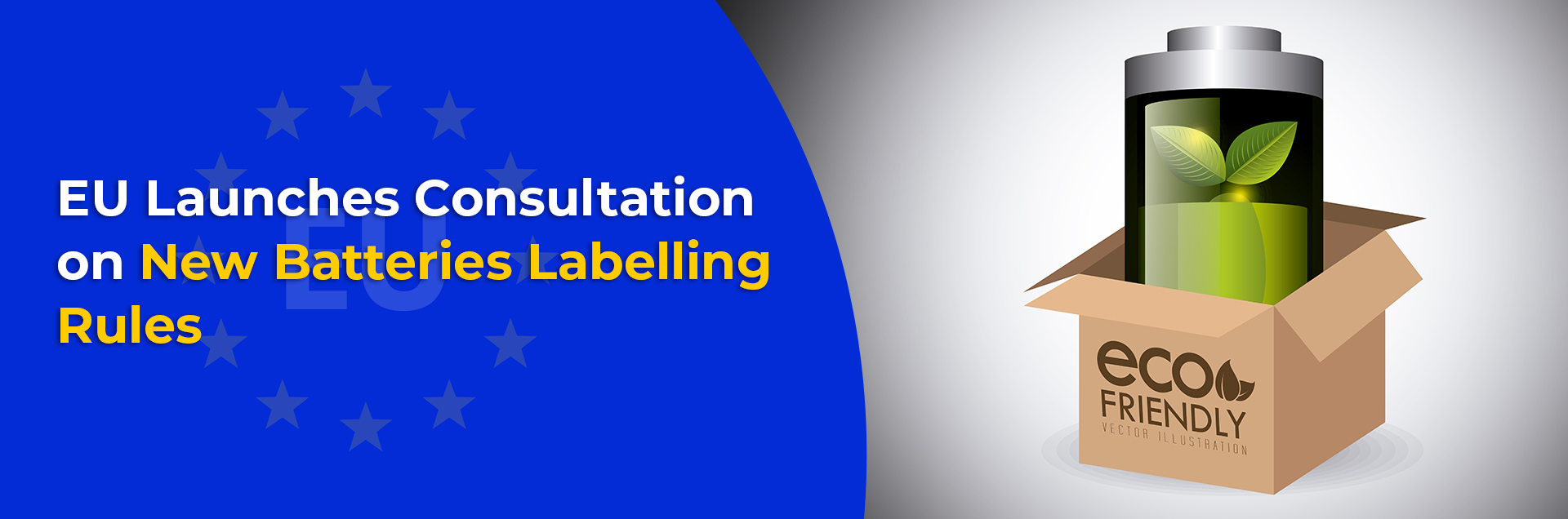
The European Commission has launched a public consultation on draft harmonised battery labelling rules under the EU Batteries Regulation (EU) 2023/1542.
The initiative aims to establish clear, consistent, and enforceable labelling requirements for all batteries placed on the EU market, supporting consumer transparency, environmental protection, and the circular economy
Why does battery labeling matter?
The new EU Batteries Regulation represents a major overhaul of previous legislation, covering the entire battery lifecycle—from raw material sourcing and manufacturing to use, recycling, and end-of-life management.
Battery labelling plays a critical role in supporting the EU’s energy transition, particularly for electric vehicles, renewable energy storage, and light means of transport.
Key objectives of the proposed labelling rules include:
- Enhancing transparency on battery performance, composition, and environmental footprint
- Ensuring harmonised labelling standards across EU Member States to prevent market fragmentation
- Promoting recycling and circular economy practices through clear end-of-life and recyclability information
What do the draft rules cover?
General Labelling Requirements
All batteries placed on the EU market must carry a standardized label, as defined in Annex VI of the Batteries Regulation. Required information includes:
- Battery category
- Manufacturer and identification details
- Capacity and performance data
- Information on hazardous substances, where applicable
Labels must be visible, legible, and indelible, printed directly on the battery where feasible, or otherwise provided on packaging or accompanying documentation.
Carbon Footprint and Performance Classes
Certain battery types—including electric vehicle batteries, rechargeable industrial batteries over 2 kWh, and batteries for light means of transport (LMT)—must display a carbon footprint performance class linked to the specific model and production site.
This enables users to better assess the environmental impact of batteries.
Hazardous Substances Disclosure
Where relevant, labels must clearly indicate the presence of hazardous substances beyond mercury, cadmium, and lead, supporting safer use and environmentally responsible choices.
Use of Digital Tools
To address space and multilingual constraints, the draft rules allow the use of QR codes and digital solutions. These tools can provide extended information such as technical specifications, lifetime data, and sustainability details.
Alignment with the EU Batteries Regulatory Framework
The proposed labelling rules are a key element of the EU’s broader battery sustainability framework:
- The Batteries Regulation (EU) 2023/1542 replaces the former Batteries Directive and applies to all battery types
- New obligations on carbon footprint reporting, recycled content, recyclability, and supply-chain due diligence are being phased in
- A digital battery passport, accessible via QR code, is expected to enhance traceability and lifecycle transparency by 2027
Together, these measures aim to ensure a sustainable, competitive, and circular EU battery market.
Stakeholder Participation
Who can respond?
Battery manufacturers, importers, recyclers, consumer organizations, environmental groups, recyclate markets, and individual citizens.
How to participate?
Feedback can be submitted through the EU “Have Your Say” portal before the consultation deadline.
Why it matters?
Stakeholder input will help shape the final implementing rules, ensuring they are practical, balanced, and effective.
What happens next
Following the review of consultation feedback, the European Commission is expected to adopt an implementing regulation that will:
- Standardise battery labelling formats and content
- Set compliance timelines for new labels
- Complement other EU battery initiatives, including digital battery passports and recyclability targets
Once adopted, battery labelling will become a core compliance requirement for all companies placing batteries on the EU market.
Takeaways
- Battery labelling is evolving into a critical tool for consumer information and market transparency
- The new rules strengthen the EU’s circular economy and climate-neutrality objectives
- Stakeholder feedback now will directly influence future EU-wide compliance obligations
Reach out to our regulation experts on chemical and product regulatory compliances