






















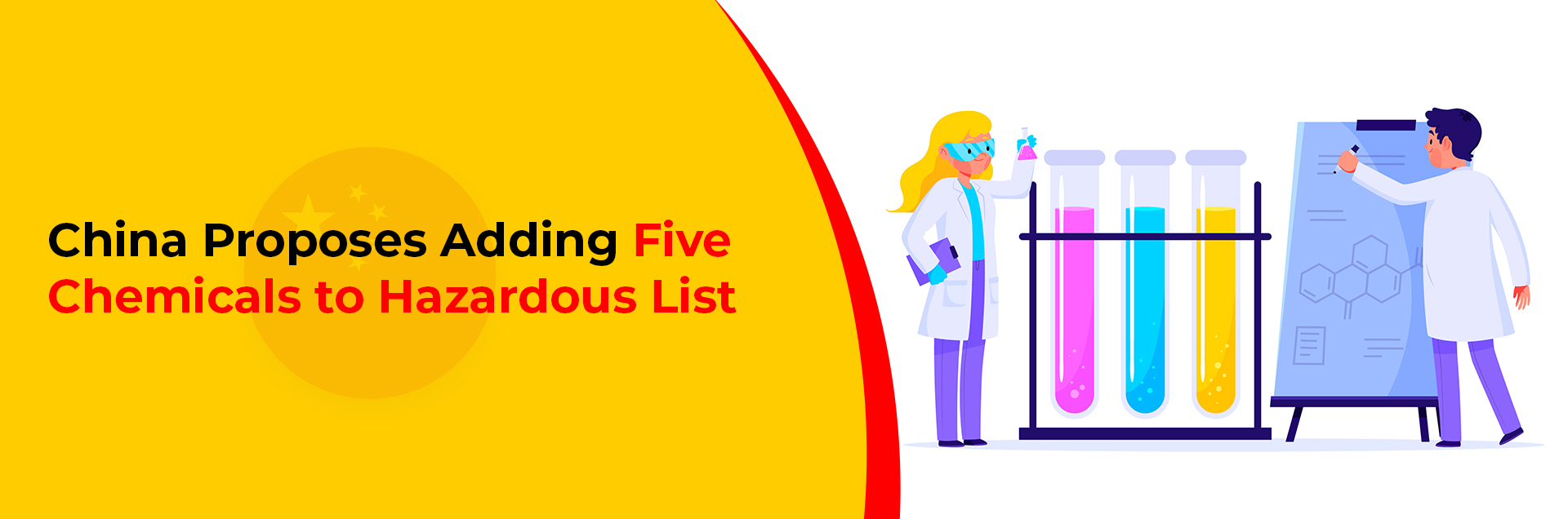
China is taking steps to strengthen chemical safety oversight by proposing the inclusion of five additional substances in the Catalog of Hazardous Chemicals. The proposal was released by the Ministry of Emergency Management (MEM) and is currently open for public consultation.
The move reflects China’s continued efforts to enhance risk-based chemical management and prevent safety incidents involving high-risk substances.
Chemicals Proposed for Inclusion
The proposal identifies five chemicals with significant safety and environmental concerns, along with their respective hazard profiles:
3-Chloropropyne (Propargyl Chloride)
CAS No.: 624-65-7
A highly flammable substance with acute oral and inhalation toxicity. It also poses risks of skin and eye damage and long-term aquatic toxicity.
2-Iodylbenzoic Acid
CAS No.: 61717-82-6
Classified as an explosive chemical, with additional hazards including skin corrosion, serious eye damage, and specific target organ toxicity following single exposure.
2-Diazoacetoacetic Acid 4-Nitrobenzyl Ester
CAS No.: 82551-63-1
Identified primarily as an explosive substance, requiring strict handling and storage controls
Methane sulfonyl Azide
CAS No.: 1516-70-7
An explosive chemical presenting high risks during manufacturing, transportation, and use.
2-Nitro-3-Methylbenzoic Acid (2-Nitro-m-Toluic Acid)
CAS No.: 5437-38-7
Associated with skin irritation, serious eye damage, and specific target organ toxicity from single exposure.
Regulatory Basis for the Proposal
In China, hazardous chemicals are regulated under the Regulations on the Safety Management of Hazardous Chemicals (State Council Decree No. 591). Substances listed in the Catalog of Hazardous Chemicals are subject to stricter controls, including licensing, safety management systems, and enhanced supervision across the supply chain.
Public Consultation and Next Steps
The draft proposal has been released for public comment, allowing industry stakeholders to provide feedback before the final decision is made. Once finalized, the updated Catalog will impose immediate compliance obligations on affected businesses.
Impact on Chemical Manufacturers and Importers
Companies involved in the production, import, storage, transport, or use of the proposed substances should begin assessing potential regulatory impacts. Recommended actions include:
- Reviewing product portfolios for affected substances
- Preparing for enhanced safety and licensing requirements
- Monitoring official announcements from MEM
Early compliance planning will help minimize regulatory risks and ensure business continuity.
Regulatory Outlook
The proposed update highlights China’s increasing focus on preventive chemical risk management and stricter oversight of hazardous substances. Additional updates to hazardous chemical controls are expected as authorities continue to refine safety governance frameworks.
Reach out to our regulation experts on chemical and product regulatory compliances