









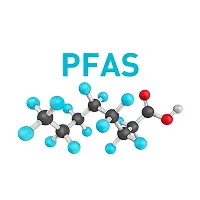


















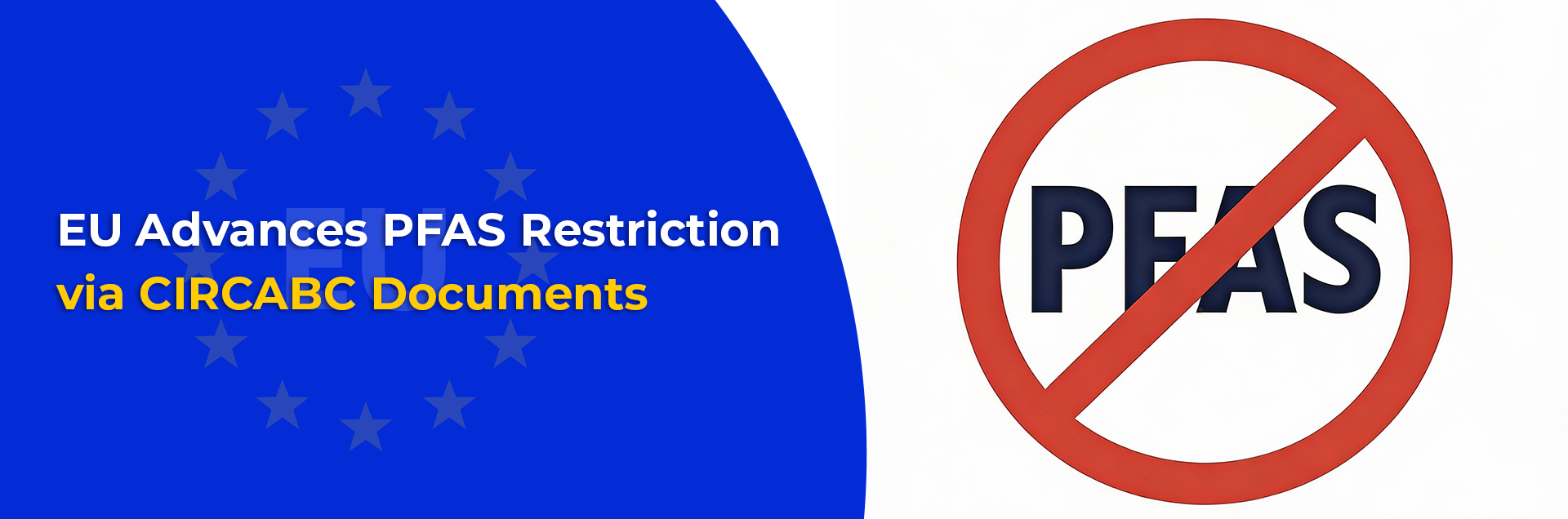
The European Commission has circulated detailed draft materials on the proposed restriction of per- and polyfluoroalkyl substances (PFAS) through its internal platform, CIRCABC, marking an advanced stage in the EU’s regulatory process under REACH.
Recent Update: The European Chemicals Agency Committee for Socio-Economic Analysis (SEAC) agreed its draft opinion on 10 March 2026, followed by the launch of a 60-day public consultation on 26 March 2026. These developments form the basis of the documents now shared via CIRCABC.
Key Developments
The CIRCABC materials provide detailed technical and regulatory inputs supporting the EU-wide PFAS restriction proposal. These documents are used by Member States and EU institutions to refine the scope, conditions, and implementation of the restriction before formal adoption.
The shared drafts typically include:
Proposed legal text and restriction conditions
- Technical annexes defining PFAS scope
- Sector-specific assessments and use-case analysis
- Proposed derogations and transition timelines
- Stakeholder and committee feedback
This reflects a late-stage drafting phase, where regulatory elements are being finalized.
Regulatory Framework
The restriction is being developed under the REACH Regulation (EC) No 1907/2006, with scientific and economic evaluation carried out by committees of the European Chemicals Agency.
The process includes:
- Risk assessment (RAC)
- Socio-economic analysis (SEAC)
- Final decision-making by the European Commission
- CIRCABC serves as the platform for sharing supporting documents throughout this process.
Scope & Threshold Insights
The draft restriction follows a broad, group-based regulatory approach:
- Covers a large group of PFAS substances (10,000+)
- Applies to manufacture, use, and placing on the market
- No tonnage-based thresholds
- Likely includes very low concentration limits for PFAS presence in products
- Based on hazard characteristics rather than volume
- This approach reflects a shift toward preventive, group-level chemical regulation.
Proposed Restrictions & Derogations
- Core Measures
- Broad restriction or ban on PFAS use across most applications
- Controls on PFAS-containing products and imported articles
- Lifecycle-based regulatory coverage
- Indicative Derogations
- Time-limited exemptions for essential uses
- Sector-specific allowances (e.g., medical, industrial, semiconductor applications)
- Transition periods to enable substitution
Affected Stakeholders
- Chemical manufacturers and importers
- Downstream industries (automotive, electronics, textiles, coatings, packaging)
- Consumer product companies
- Global exporters supplying to the EU market
The proposal is expected to have cross-sectoral and international impact.
Compliance & Market Implications
The draft materials indicate significant future obligations:
- Identification and phase-out of PFAS across product portfolios
- Reformulation and substitution with safer alternatives
- Enhanced supply chain transparency and data collection
- Product redesign and compliance documentation updates
These requirements may lead to increased compliance costs and operational adjustments.
Timeline & Next Steps
- 10 March 2026: SEAC draft opinion agreed
- 26 March 2026: Public consultation launched (60 days)
- 2026 (expected): Final RAC and SEAC opinions
- Post-2026: European Commission adoption of restriction
- Implementation: Phased transition periods for industry
The circulation of PFAS restriction drafts via CIRCABC signals that the EU is approaching the final stages of one of the most comprehensive chemical restrictions to date. With no tonnage thresholds, broad substance coverage, and potential low concentration limits, the proposal will significantly reshape compliance requirements across industries. Early preparation and proactive substitution strategies will be critical for businesses operating in or exporting to the EU.
Source: EU PFAS Draft Update
Reach out to our regulation experts on chemical and product regulatory compliances