
































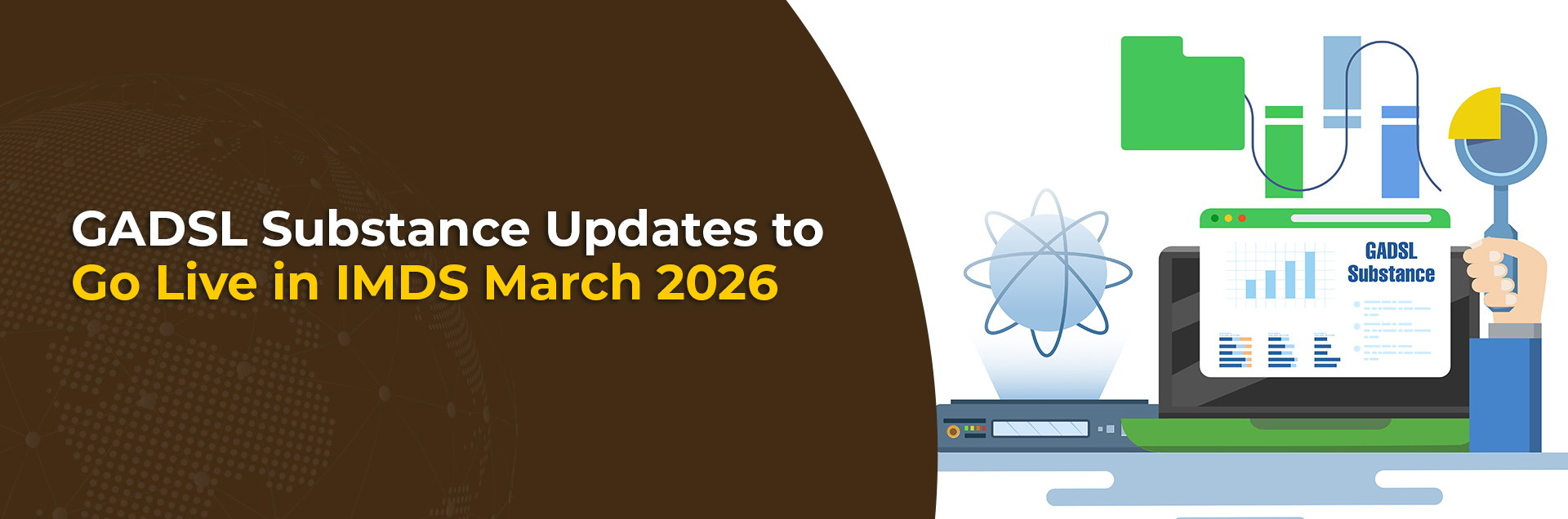
The latest revisions to the Global Automotive Declarable Substance List (GADSL) will be officially implemented in the International Material Data System (IMDS) on March 20, 2026.
This update ensures that newly identified declarable and restricted substances are digitally integrated into IMDS, enabling real-time compliance tracking across the global automotive supply chain.
Latest Updates in the GADSL
1. Addition of New Declarable Substances
The updated GADSL introduces newly classified substances that:
- Require mandatory declaration once threshold limits are exceeded
May be restricted or prohibited under global regulations
Are linked to evolving concerns such as toxicity, persistence (e.g., PFAS), and recyclability impacts
2. Automatic Flagging in IMDS
Once implemented:
- IMDS will automatically flag materials containing updated GADSL substances
- Flags will appear at component and material levels within submissions
- Suppliers and OEMs will receive compliance alerts during data entry and validation
- This significantly reduces the risk of non-compliant submissions and improves early detection.
3. Alignment with Global Regulations
The GADSL update reflects regulatory developments across major jurisdictions, including:
- REACH Regulation (EU)
- ELV Directive (EU)
- Emerging restrictions on PFAS, heavy metals, and flame retardants
- This ensures IMDS remains aligned with global compliance expectations.
Industry Impact
The integration of updated GADSL substances into IMDS reinforces the automotive sector’s commitment to:
- Chemical transparency across the supply chain
- Regulatory compliance and risk mitigation
- Sustainable material selection and recyclability
However, it also increases operational pressure on:
- Tier-1, Tier-2, and raw material suppliers
- OEM compliance and sustainability teams
- Companies must now ensure higher accuracy, traceability, and responsiveness in material declarations.
Key Compliance Risks
Failure to align with updated GADSL requirements may lead to:
- Rejection of IMDS submissions by OEMs
- Delays in product approvals and SOP timelines
- Non-compliance with global chemical regulations
- Increased audit and reporting risks
What Companies Need to Do ?
With the update going live, companies should take immediate and structured actions:
- Identify materials containing newly flagged substances
- Revalidate legacy submissions for ongoing programs
- Revise Material Data Sheets (MDS) in IMDS
- Ensure correct classification (declarable, prohibited, exempted)
- Communicate updates to suppliers and sub-suppliers
- Request updated declarations and full material disclosures (FMDs)
- Update compliance checklists and validation rules
- Train teams on new GADSL substance categories
- Track updates from IMDS releases and GADSL publications
- Review internal alerts (including automated IMDS notifications and emails)
- Real-time system-level enforcement via IMDS flags
- Inclusion of emerging high-risk substances (e.g., PFAS-related groups)
- Greater emphasis on data quality and supply chain transparency
- Closer linkage between regulatory compliance and digital reporting systems
- Regulatory requirements are embedded directly into reporting tools
- Compliance becomes proactive rather than reactive
- Data transparency supports circular economy and recyclability goals
1. Review Existing IMDS Data
2. Update Material Declarations
3. Engage Supply Chain
4. Strengthen Internal Controls
5. Monitor Official Notifications
What’s New in This Update
Strategic Significance
This update marks a shift toward digital compliance enforcement, where:
Source: GADSL Update
Reach out to our regulation experts on chemical and product regulatory compliances