





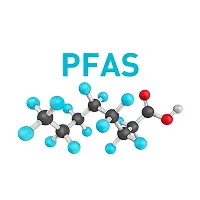

















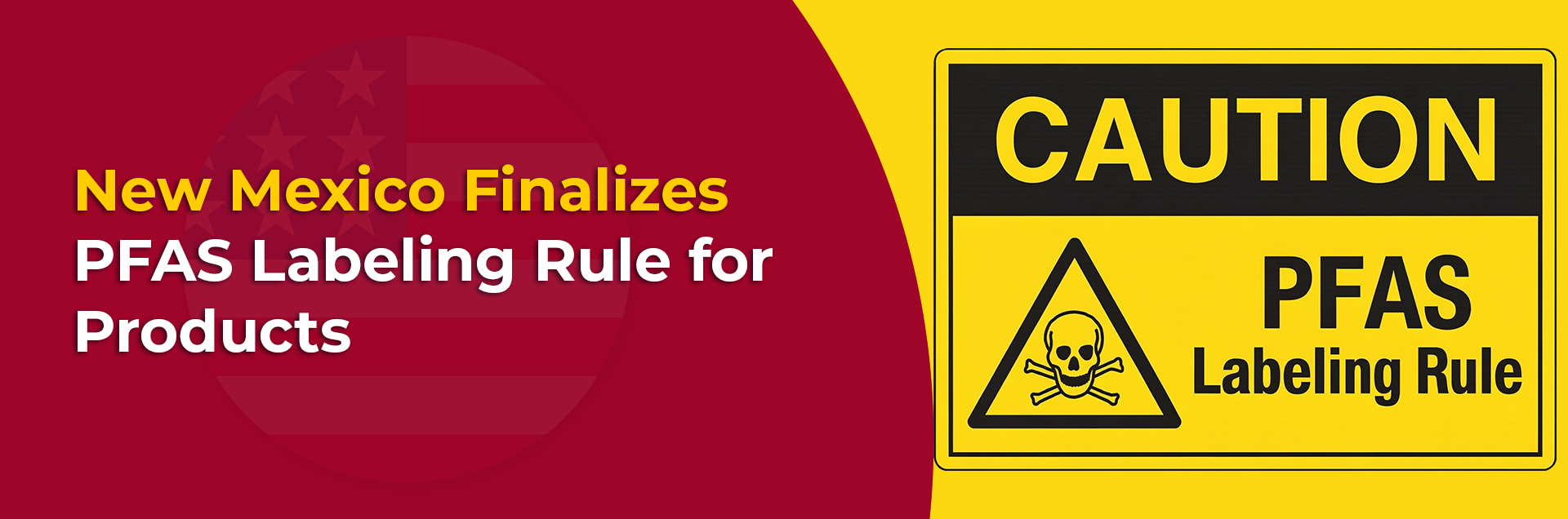
The New Mexico Environment Department (NMED) has finalized rules implementing the state’s PFAS Protection Act (HB 212), introducing mandatory labeling requirements for products containing intentionally added PFAS. The rule represents one of the most comprehensive PFAS labeling frameworks globally and is part of a broader effort to phase out “forever chemicals.”
Regulatory Developments
The finalized rule requires that most products containing intentionally added PFAS must carry a clear label informing users of their presence. This requirement applies broadly across product categories and is not limited to products already subject to bans.
The labeling framework is designed to enhance transparency and enable informed decision-making regarding PFAS exposure, which is associated with environmental persistence and health risks.
Labeling Requirements
Products must include a visible PFAS label indicating the presence of intentionally added PFAS
Acceptable label formats may include:
- “Contains PFAS”
- “Made with PFAS”
- Symbol-based labels (e.g., flask icon with PFAS)
The requirement applies regardless of whether the product is otherwise restricted or exempt.
The rule simplifies earlier proposals by removing certain elements (e.g., mandatory website links), focusing on clear consumer-facing disclosures.
Scope & Threshold
- Applies to intentionally added PFAS (not impurities)
- No concentration threshold — labeling is triggered by intentional use
- Covers a wide range of products, including electronics, textiles, cookware, and packaging
Key Clarification
Under the regulation, the term “consumer product” is defined broadly and may include products used by professional or industrial end users, not just household consumers.
This means that certain B2B, industrial, or professional-use equipment may also fall within scope if PFAS are intentionally added.
Exemptions & Special Cases
Certain products may be exempt, including:
- Medical devices and pharmaceuticals regulated at the federal level
- Veterinary products
- Products subject to conflicting federal labeling laws
Manufacturers may also request labeling waivers, subject to approval and periodic review.
Who is Affected
The rule applies to:
- Manufacturers of products containing PFAS
- Importers and distributors placing such products on the New Mexico market
- Producers of PFAS-containing components
Companies supplying professional, industrial, or B2B products should assess applicability, as scope is not limited to traditional retail consumer goods.
Compliance & Market Impact
The rule introduces significant obligations:
- Product reformulation or substitution of PFAS
- Label redesign and packaging updates
- Supply chain data collection to identify PFAS usage
- Increased regulatory scrutiny and enforcement risk
This operates alongside phased product bans, creating a dual framework of disclosure and restriction.
Timeline & Key Deadlines
July 2026: Rule implementation (administrative)
January 1, 2027:
- Mandatory PFAS labeling begins
- Manufacturer reporting obligations commence
- Initial product bans take effect
Future phases:
- 2028: Expanded product bans
- 2032: Broad PFAS prohibitions (with exemptions)
Key Takeaway
New Mexico’s PFAS labeling rule establishes a broad disclosure regime with no concentration thresholds and wide applicability.
Important: Companies should not assume exclusion based on product type alone—professional and industrial-use products may also be in scope depending on end use and regulatory interpretation.
Source: View Official New Mexico PFAS Rule (March 2026 COMMS)
Reach out to our regulation experts on chemical and product regulatory compliances